

Media interview techniques and mastering corporate messaging matter but they are not the whole story, they are just one element of effective media training.
The strongest results come when experienced PR professionals and strategic communicators work together to help a senior spokesperson understand how to best deliver an answer, but also what they need to say, why it matters, who needs to hear it and how it supports the organisation’s broader priorities.
Some would say that getting this balance right is an art form.
Our tailored, three-stage Primary Presentation Program brings all these elements together.
“Effective media, presentation and panel training is about giving leaders the judgement, structure and practical techniques they need to respond clearly and to give them the tools to deliver their corporate messages confidently,” says Frank Coletta, Senior Executive, Strategy & Public Affairs at Primary Comms Group.
“This is especially the case when the questions are difficult, unexpected or high stakes. The goal is not to simply memorise the ‘right’ answer but to understand what needs to be communicated and how to respond in a way that is clear and authentic.”
Stage One: Building the strategic foundation
The process begins well before the first practice interview.
We work with the client’s team to understand the organisation’s priorities, audiences, risks and any issues a senior spokesperson could reasonably be asked to address.
Our extensive experience working on issues-rich projects gives us deep expertise in developing clear messaging frameworks, supported by relevant proof points, likely questions and what accessible, easily understood language, looks like.
Only then do we move into media fundamentals and interview techniques. Our approach helps participants better understand the media (new and legacy) and stakeholder landscapes, how they are evolving in response to changing news consumption habits, and what this means for how organisations communicate and engage with their audiences.
Stage Two: Putting preparation into practice
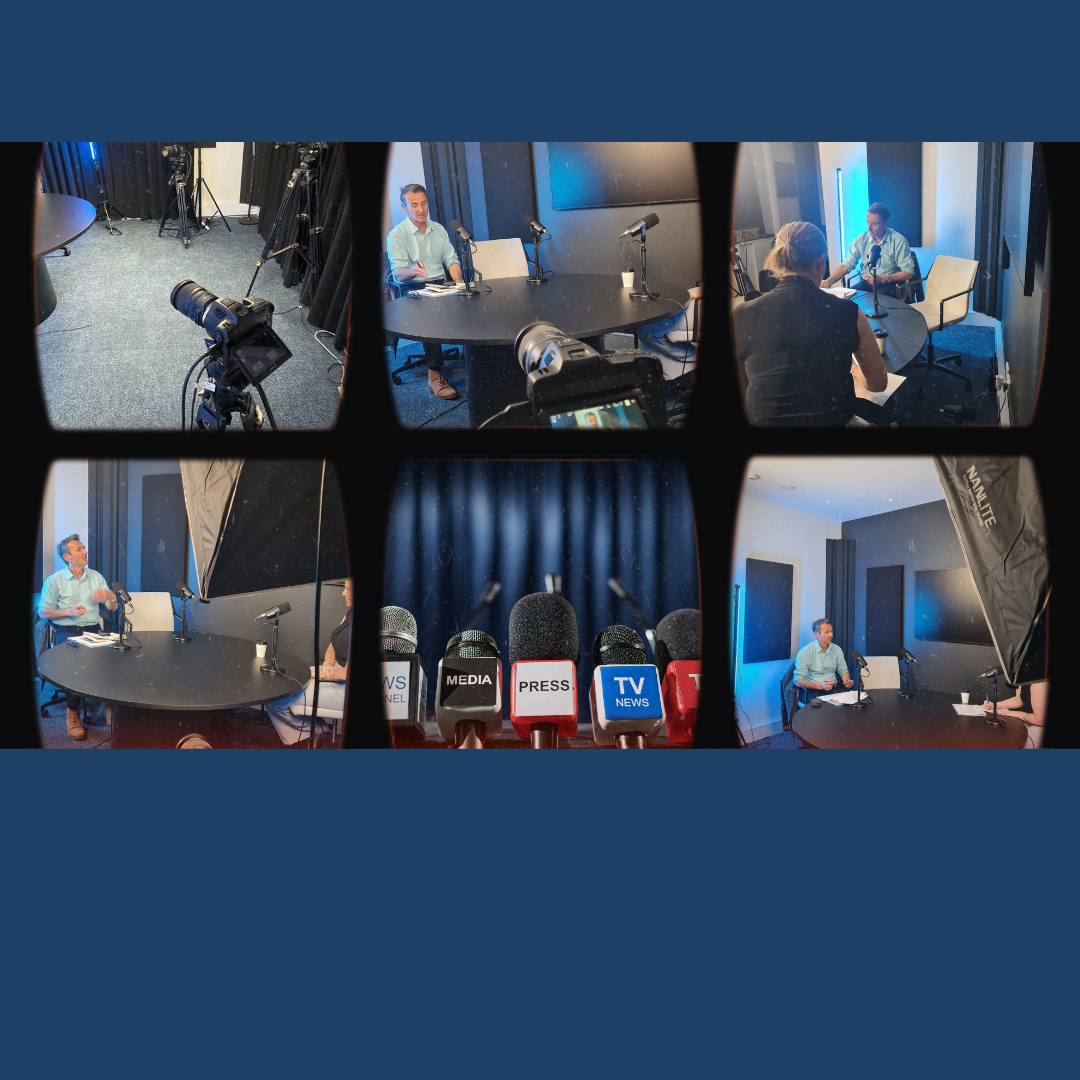
The next stage brings the preparation together through realistic interview scenarios developed around the issues, risks and situations identified through our research.
We put participants through their paces in a supportive environment, providing guidance, redirecting where needed and helping establish the practical habits required to respond effectively under pressure. Sessions are often conducted in a professional recording studio to replicate a genuine interview setting.
Each scenario reflects the organisation’s operating environment, likely pressure points and the scrutiny a spokesperson may face. The exercises test concise media grabs, longer-form responses and the ability to remain calm, clear and authentic when questions become difficult, unexpected or persistent.
Each interview is recorded and reviewed, with detailed feedback from experienced media and communication professionals.
“Realistic interview practice is where preparation becomes instinctive. Reviewing a recording allows clients to see what the audience sees, whether the message is clear, if the answer goes on too long and how tone and body language can change under pressure,” he added.
Reviewing yourself can be uncomfortable, we are all our harshest critics, but it a fundamental part of the process. It reveals where messages were unclear, answers became too complicated, or the tone, pace and body language weakened the delivery.
This reflection is a great help in refining performance, addressing unhelpful habits and build genuine confidence.
Stage Three: Reinforcing the learning
Our training does not end when the formal session concludes.
Primary’s approach is not “train and forget”. The program is reinforced through follow-up coaching designed to consolidate the learning and help participants continue developing their skills.
The result is stronger judgement, clearer communication and greater confidence across media, stakeholder, presentation and other public-facing situations.
A practical exercise
Before your next interview or public appearance, ask yourself:
- What is the most important thing I want a specific audience to understand and who is that audience?
- What evidence, example or proof point makes that message credible?
- What is the most difficult question I may be asked?
- How can I answer it directly before returning naturally to my central message?
- Then practise your response aloud in no more than 30 seconds.
We like to provide so-called “hot tips” to the people we work with – for instance, an easy exercise is to record yourself and listen back. Yes, confronting it can be and uncomfortable talking to yourself, but it’s worth it, it works.
When reviewing, is your main point immediately clear? Do you sound natural? Would someone outside your organisation understand what you mean? It will help you consider what changes you might make when the phone rings unexpectedly and a journalist is on the other end.
There’s a lot to think about to ensure you are best prepared for that moment, when it comes.
If you are preparing for an upcoming interview, announcement or now find yourself in a high-end public-facing role, contact our team to discuss how our Primary Presentations Program can help.

