Category Archives: Uncategorized

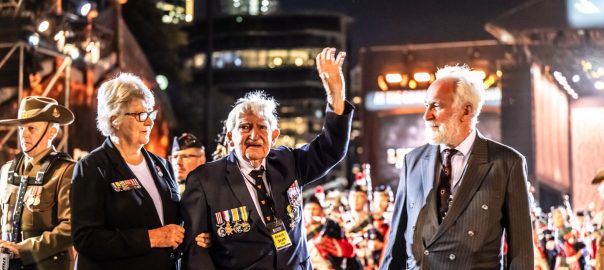
This ANZAC Day we will remember them, those who served, and their families

ANZAC Day is a time to remember those who served, but also the families who continue to carry the weight of that service every day. Behind every uniform is a child, a partner, a parent and they serve in their own way too.

So as we pause to honour the courage and sacrifice of our service personnel this ANZAC Day, Resolute Ready continues to shine the light on the impact of service in the lives of veterans and their families. That is why it has launched the Digital Education Backpack, a free, world-first online resource offering tailored mental health and learning resources for children of veterans and first responders.

Developed in partnership with The Insight Centre and funded by the Department of Veterans’ Affairs, the Backpack equips parents, carers, and educators with practical tools to better understand trauma and foster resilience children need at home and in the classroom.

This is powerfully reflected in the words of Warrant Officer Ken Robertson, OAM, Senior Enlisted Advisor to the Chief of Defence Force and Resolute Ready Ambassador, who spoke at the official launch of the Backpack earlier this month at the Anzac Memorial, alongside other national advocates.  “The impact of service life isn’t confined to the battlefield. It’s in every missed birthday, every relocation, every goodbye. Resolute Ready is more than resources, it gives families tools to heal and thrive,” he said.

Lidia Faranda-Hall, Founder and Managing Director of Resolute Ready, said the Backpack directly responds to key findings from the Royal Commission into Defence and Veteran Suicide.

“The trauma of service doesn’t end with discharge, it echoes through families, classrooms and homes. The Digital Education Backpack is an extension of the Resolute Ready Hub and directly addresses recommendations around early intervention and continuity of care for families and children,” she said.

“It recognises that connection is intervention. It helps parents, grandparents, carers, guardians, and educators understand trauma responses, support resilience, and provide stability for the children of service personnel.”

At Primary Comms Group, we’re proud to support the incredible team behind Resolute Ready including sponsors and supporters, and our friends at Mercy Me Marketing, in launching this much-needed national initiative. Hats off to the visionaries, advocates, and researchers who made the Digital Education Backpack a reality.

Behind every veteran is a family — and they serve too. Explore the Digital Education Backpack: https://resoluteready.com/backpack

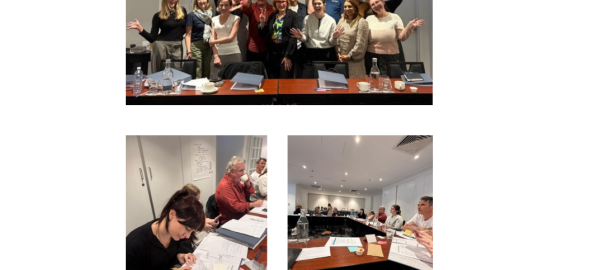
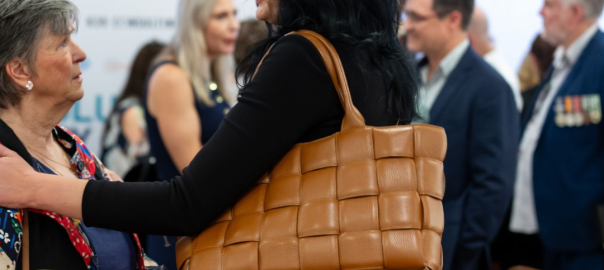
*Photos from the official launch of The Digital Backpack in April 2025, courtesy of Resolute Ready


Primary at the heart of policy conversations

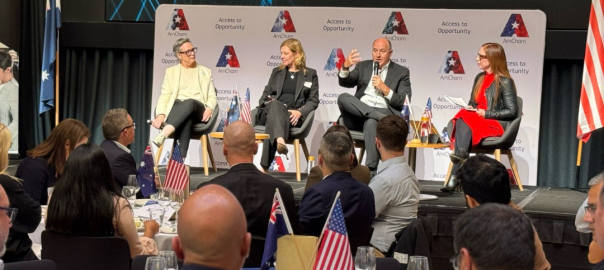
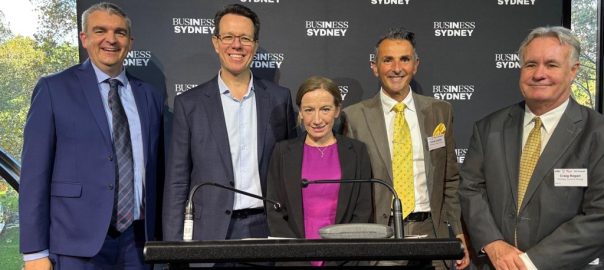
Primary Comms Group was proud to power up Business Sydney’s big night at Chifley Square, as the official sponsor for the launch of Decide 25: The Policy Makers.

With the May 3 election on the horizon, Assistant Minister for Immigration, the Hon. Matt Thistlethwaite MP, and Senator Dave Sharma took the stage to tackle the big questions shaping Australia’s future.

Primary CEO Chris Hall, introduced by Business Sydney’s Paul Nicolaou, kicked things off with a quick outline of our organisation and the work of the 20-strong team before handing over to the evening’s headline speakers.

Daily Telegraph national political editor Clare Armstrong kept the energy high as the audience put the pollies through their paces before opening up the floor for questions from our guests.

Massive thanks to everyone who came along – and to our partners at Business Sydney for pulling together a top-tier event.

Round two will take place on Thursday, 1 May: Decide 25: The Political Shakers will feature The Hon. Graham Richardson AO, political commentator Sky News and The Australian, Michael Photios, Chairman of PremierState & PremierNational, Bruce Hawker, Special Counsel at Fitzpatrick & Co Advisory and Catherine Douglas, Managing Director at CT Group Australia.

Head to Business Sydney to find out more about this event.


Lest We Forget: ANZAC tribute to shine at Opera House forecourt

Today the Daily Telegraph launched its We’re For ANZAC Day campaign, which spotlights the work of Primary Comms Group client, The Australian Remembrance Foundation and the moving Lest We Forget: Harbour Sunset Tribute on the eve of ANZAC Day to be held for the first time on the Opera House forecourt from 4.30pm-6pm on April 24.

The concert will feature renowned Australian performers, to be announced shortly. The Daily Telegraph reporter Peter Jenkins sat down with General Sir Peter Cosgrove to discuss the upcoming event and the importance of pausing to remember those who have served the country and those who made the ultimate sacrifice.

Tickets for the tribute are still available here: Home | Lest We Forget

The entrée has been underwhelming but hold the salad

There’s a maxim in media training that’s used to coach people to effectively deliver their messages: “Hold the salad, just serve up the meat.”

Almost a week into a listless Federal election campaign, precious little fibre has appeared on the plates of the Government or the Opposition.

Peter Dutton entered the fray with declining public polling and promising to unveil substantial policies. Voters have been taking a good, hard look at the alternative PM and in the first six days, but so far only Labor-generated negatives have been filling the vacuum.

Labor’s painting of Dutton as a lite version of Donald Trump who will slash public services and ban anybody from working from home is crude but effective.

In Australian political campaigns, countering attacks is the job of “attack dogs”. They’re senior front-benchers who are close to the leader, good with a media grab and across all portfolios.

Shadow Attorney-General Michaelia Cash seems to have the job but has been sighted in media only sporadically.  Campaign spokesperson Senator James Patterson is normally an incessant and articulate voice on national security but has been near invisible.
From a distance, that hat points to an Opposition too slow to react or one that’s being flooded by Government white noise.

Anthony Albanese’s belated positioning as an action man battening down hatches for a cyclone that turned into a rain dump a few weeks ago was opportunistic but a winner as Labor scored some big personal hits on Dutton.

The campaign has a long way to run but Labor has the upper hand in a plod towards likely minority government. Neither major party is riding a wave of public support.

Craig Regan, Senior Account Director, Primary Communication

Every comms brief is a behaviour change challenge: Lessons from Electricity Safety Week

Electricity Safety Week, now in its 25th year, is a powerful reminder that impactful communication isn’t just about broadcasting messages, it’s about changing behaviour.

Originally developed by Primary in response to research highlighting the need for more effective electrical safety education for children, the week-long initiative held each year in September continues to evolve, reaching thousands of primary school students with messages that quite literally save lives.

At its core, Electricity Safety Week is a masterclass in behaviour change communications. For PR professionals, it underscores a crucial truth: every brief is, at heart, a behaviour change challenge. Whether we’re encouraging safety near powerlines or sparking conversations around mental health, success hinges on understanding what truly motivates people, or in the case of Electricity Safety Week – primary school aged children – and how to shift what humans do and how they do it, through creative strategy and stakeholder collaboration.

It is critical that PR and comms strategies can harness behavioural insights to continuously interrogate the brief more deeply, even if it seems like it’s the same project each year. It is only when we unlock hidden audience drivers, and engage closer with key stakeholders who become your most avid advocates, that we are able to deliver campaigns that do more than inform – they transform.

Read more about our Electricity Safety Week program which we continue to run on behalf of electricity distributors in NSW (Ausgrid and Endeavour Energy) and QLD (Energy Queensland). It’s where research-led insights, stakeholder partnerships and creativity can intersect to build long-term engagement and purpose-led campaigns.

It’s time to stop ticking boxes and start shifting dials. Because when we treat communication as behaviour change, we create campaigns that matter and last.

Mary-Anne Boustany, Account Director, Primary Communication

Celebrating a waterway of life: 130 Summers of Royal Life Saving

Exhibition launch in NSW Parliament House

For 130 summers, Royal Life Saving has helped millions of Australians stay safe around the water. From backyard pools and country rivers to lakes, dams, and local swimming spots, Royal Life Saving has been part of Australia’s story, teaching generations to swim, rescue, and respond.

This week, Primary helped Royal Life Saving to launch a new exhibition in the NSW Parliament House.

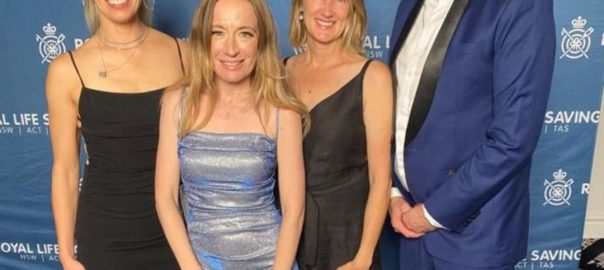
As part of our work, Primary coordinated the attendance and involvement of The NSW Premier Chris Minns and Olympic diver and social media sensation, Sam Fricker, at the launch, which brought together community leaders, Members of Parliament, industry and community organisations to mark 130 Summers of Royal Life Saving.

New South Wales Premier, Chris Minns spoke and awarded the bronze medallion and a commemorative bronze medallion certificate (the original) to Olympic diver Sam Fricker, along with Royal Life Saving President Jim Whiteside and CEO Michael Ilinsky.

Sam Fricker, one of Australia’s top social media influencers, reflected on his own experience earning the Bronze Medallion when he – like so many young Australians – participated in the program while in high school. His support, contributed to an overall reach of 8.16 million on social media.

Primary also worked with expert exhibition designer and printer to write and produce 10 exhibition panels that present the history and impact of swimming and water safety. The two metre panels tell the stories of the people and places that have shaped our identity as a water-loving nation and serve as a public reminder of the importance of ongoing water safety and education.

The launch event, attended by Members of Parliament, community and industry leaders yesterday, gave key stakeholders the opportunity to preview the exhibition and commemorate the conclusion of yet another summer – the 130th Summer of Royal Life Saving in Australia.

Primary is proud to have been a small part of this 130-year journey. We have worked with Royal Life Saving NSW for four years and have supported some of the programs featured in the exhibition – through creative story-telling, media safety messaging campaigns, stakeholder engagement and government advocacy.

The exhibition will be in the Fountain Forecourt, NSW Parliament House, from Monday 1 April to Friday 23 April.

Please take a look at the video we created for RLS below, along with some snapshots from the event.


Australian Federal Budget: For a few dollars more…


It was 2003 when Howard era Minister, Amanda Vanstone, dropped an infamous clanger in a media interview about a Budget tax cut.

“Five dollars. Hell, what will it buy them? A sandwich and a milkshake if you are lucky. Not much,” the South Australian senator thundered – much to the consternation of her Cabinet colleagues because it was a Liberal-National Budget.

In 2016, Labor’s Bill Shorten was livid that tax cuts handed down by Malcom Turnbull’s Government only averaged just $6 a week for people earning $80,000 a year.

“That’s not much. I’m not going to insult the intelligence of people and say that’s a reason to go out and buy a Tatts ticket. But we will back that particular change in, because we are on the side of people at work every day,” said the man now earning $860,000 a year as the head of a Canberra University.

Fast forward to 2025 and the Albanese Government is handing out tax cuts of…$5 a week. Is that enough to buy a cup of coffee?

Not in the once down-at-heel but now gentrified Sydney suburb of Surry Hills, where Primary is based. You’ll pay up to six bucks, with the notable exception of The Balkan Butler in Foveaux Street where a regular cup comes in at $4.80.

There’s no way you’ll buy a milkshake. At the salubrious Keg and Brew Hotel, a fiver won’t get you a whiff of the froth on top of a schooner of Resch’s.

Bill Shorten backed in the 2016 cuts despite saying they were designed for millionaires. That’s the kind of thing that politicians do. This time around, the Coalition is Just Saying No. At the time of writing, the Government is forcing the Opposition’s hand by trying to make the cuts law before it calls an election.

Reality is that whatever goes down at Parliament House over the rest of this week will go largely unnoticed by the people whose hearts, minds and votes all sides of politics so desperately want to win.

Craig Regan, Senior Account Director, Primary Communication

Telling stories through art: Naggangbi transforms Tempe cycle path

Today our team joined the community in celebrating the unveiling of Naggangbi, an extraordinary 800-metre public artwork now bringing life and colour to the Alexandra Canal Cycle Path in Tempe.

Commissioned by Sydney Desalination Plant Pty Limited (SDP), Naggangbi is the work of artists Carmen Glynn-Braun and Dennis Golding of The Re-Right Collective. It’s a bold and vibrant mural that not only transforms a stretch of public infrastructure but also honours culture, storytelling, and connection to Country.

The Collective worked closely with local artists and curators Dakota Dixon and Wirin Lowe, who advised on specific elements of the mural. The artwork itself was painted by Indigo Jo, curated by Cultural Capital, with language by Gujaga Foundation, each layer adding depth and meaning to the final piece.

Primary has been working with Sydney Desalination Plant for the past five years on various projects, and this one will see our Create team produce a short film capturing the full story of the mural – from concept to creation – told through the voices of the artists who brought Naggangbi to life and community members.

We’re proud to play a part in sharing this important story, and grateful to Sydney Desalination Plant and the artists for trusting us to help bring it to a wider audience.


Earned vs paid media: trust factor or controlled amplification?

Earned media is the free publicity your brand gets from media coverage, glowing customer reviews, social media shout-outs, and old-fashioned word-of-mouth. It’s that recognition your brand “earns” without spending money.

Unlike paid media, where you’re in full control of the message and promotion, earned media relies on how well your brand resonates with others to get noticed by independent sources or publications.

So, why is earned media so priceless? Simply put it helps to build trust.

Consumers tend to believe personal recommendations and third-party endorsements more than they do traditional ads. This trust factor is exactly what makes earned media so powerful in shaping a brand’s reputation. After all, people are more likely to pay attention to a friend’s glowing review or a mention in the media than they are to a sponsored post or ad.

On the flip side, paid media involves putting your money where your mouth to promote content through ads, sponsored posts, or partnerships. This type of media lets you control the message, the timing, and target your audience, making it ideal for quick visibility, product awareness, or boosting sales. However, its success still hinges on having top-notch content and pinpointing the right audience.

As far as we are concerned, a winning media strategy blends both earned and paid media. Paid media gets the word out quickly, especially for product launches or flash promotions, while earned media builds long-term credibility and trust. By combining the two, you can also strengthen relationships with media outlets, who thrive on both advertising revenue and earned media coverage. When you amplify earned media with paid promotions, it can ensure your press coverage reaches your targeted audience.

After three decades in the media game, we’ve picked up a few tips for making the most of both earned and paid media:

  1. Use paid media to amplify key announcements: pair important news with paid media partnerships to expand your reach and target the right audience.
  2. Support major campaigns with advertisements: for larger campaigns, combine earned media coverage with paid ads, like a background ad on a webpage, to boost visibility.
  3. Retarget earned media audience: serve paid ads to users who engage with earned media, helping move them further down the funnel (for example, inviting them to a webinar or offering a discount).
  4. Combine influencers and editorial: a mix of media coverage and influencer endorsements expands your reach and boosts credibility.
  5. Repurpose earned content for paid ads: transform PR stories or press releases into ad-friendly formats like videos or blog posts to maximise their lifespan.

When you master the art of blending earned and paid media, you’ll create a strategy that builds trust, drives action, and amplifies your brand’s reach.

Mary-Anne Boustany, Account Director, Primary Communication

Walking the Trump-rope goes out the door if the PBS comes into play

Forget the cost of living and energy prices. Donald Trump is the real wild card in the forthcoming Federal election.

Be concerned about foreign interference laws and all those shadowy online actors, but The Orange Man can, and probably will, become an issue at any time.

Consider Trump’s war on tariffs. The Government’s failure to secure Australia an exemption from Trump’s steel and aluminum tariffs probably was a done deal long ago, but we export very little of both to the US anyway.

On the other hand, if Trump moves his attention to pharmaceuticals, the result will be an enormous political migraine for the Albanese Government. Australia exports about $1 billion of medicines to the US each year. Health and life sciences account for one of our largest export sectors, employing about 260,000 people. In the 12 months to February 2024, medicinal and pharmaceutical imports from all nations came close to $1.7 billion.

Next Tuesday’s Federal Budget will contain a lot of bragging about listings of drugs on the Pharmaceutical Benefits Scheme (PBS). These listings on the $17 billion a year scheme are recommendations by an expert committee of eminent professors who are independent of government.

They are usually rubber stamped by Cabinets of both political persuasions who then take all the credit that goes with announcing them.

Overseas pharma companies hate subsidised medicines but go along with the system to ensure they have access to markets.

Australian taxpayers pay an average of $85 to subsidise the cost of each prescription.

If Trump decides the world is exporting too many medicines into America and imposes tariffs, the result will be unaffordable prescription drugs for millions of Australian voters.

The Opposition will pour blame on a government whose calls the Trump administration wouldn’t take.

Labor knows it looks weak when it doesn’t stand up to Trump but doesn’t want to give US policy hawks an excuse to tear up the AUKUS agreement.

Polling by Talbot Mills Research in February found about half of Australians disapprove of Trump’s performance, with 34 percent strongly disapproving. If the USA slips into recession and has a knock-on effect for Australian superannuation balances, that will soar.

If the trade wars extend to medicines, expect the Albanese Government to come out swinging and the Opposition to cry blue murder.

Craig Regan, Senior Account Director, Primary Communication