Category Archives: Uncategorized

A cyber crisis is a communication crisis 

When technology moves at AI speed, trust can be lost just as quickly. Is your organisation’s crisis communication plan ready? 

A cyber incident may begin as a technical issue, but it can quickly become a crisis of communication, trust and reputation. 

As cyber threats continue to evolve, the rise of AI is adding another layer of complexity. From AI-enabled attacks and deepfakes to misinformation and increasingly sophisticated phishing campaigns, organisations need to think beyond how they protect their systems. They also need to consider how they will communicate when something goes wrong. 

When an incident disrupts normal operations, employees may be unable to access their usual communication platforms, information can be difficult to verify, and stakeholders may be looking for answers before the full picture is clear. 

In these circumstances, having a well-prepared crisis communication plan is critical. Organisations need clear decision-making processes, alternative communication channels and answers to some fundamental questions: 

  • Who speaks? 
  • What do you say? 
  • When do you say it? 
  • How do you distinguish fact from AI-generated misinformation? 
  • And how do you maintain trust while the facts are still emerging? 

These are not questions organisations want to be answering for the first time in the middle of a crisis. 

This Cyber Security Awareness Month, and as the Australian Signals Directorate marks its first Cyber Action Year 2026, we’re reminding organisations that communication needs to be part of their cyber and AI response planning from the outset, rather than something worked out when an incident occurs. 

The way an organisation communicates with its employees, customers, media and other stakeholders can influence how an incident is understood, how quickly confidence is restored and how its response is remembered long after the immediate threat has passed. 

AI introduces further challenges, particularly the speed at which false or misleading information can be created and shared. A fabricated statement or deepfake involving a senior executive can quickly become a reputational issue in its own right, potentially adding confusion and uncertainty at an already difficult time. 

Having clear processes to verify information, respond to inaccurate claims and communicate through trusted channels can help organisations manage these risks and maintain confidence as a situation develops. 

But effective crisis communication is about more than responding to external scrutiny. It also requires coordination across the organisation, with communication, IT, security, legal and leadership teams working together to establish the facts, agree on decisions and deliver clear, consistent information. 

Communication should not sit on the sidelines of cyber planning. It needs to be integrated into the response from the outset. 

The goal is not simply to manage the headlines, but to provide clarity, demonstrate accountability and maintain trust when it matters most. 

Because while cybersecurity helps protect an organisation’s systems and information, strategic communication helps protect something equally valuable: its reputation. 

At Primary Comms Group, we help organisations anticipate and manage emerging issues, navigate complex situations and protect their reputations through strategic communication, media relations and issues management. 

Get in touch to discuss how we can help strengthen your organisation’s crisis communication planning and response. 


Is your brand showing up in AI responses?

Not long ago, the question was: “Where does our brand rank on Google?”

Now, increasingly, it’s: “What does ChatGPT or AI platforms say about us?”

The way people discover brands is changing. AI-powered search and answer engines are becoming part of the research journey, changing what visibility looks like and creating a new challenge for communications teams.

Enter Answer Engine Optimisation (AEO).

Unlike traditional SEO, AEO isn’t just about ranking. It’s about making sure a brand is credible, relevant and easy for AI systems to understand and reference when people ask questions about a company, category or issue.

At Primary, we’re seeing clients increasingly ask: Why aren’t we appearing in AI answers? How do we get our expertise recognised? What does AI actually say about our brand?

And the answer isn’t simply “create more content.”

AI draws on information from across the web including news coverage, research, industry publications, expert commentary and company websites. That means the fundamentals of good PR still matter. In fact, they may matter even more.

A strong media story isn’t just reaching an audience. It can help establish credibility, authority and context around a brand and its people.

So, we’re adapting how we approach PR at Primary. We’re looking at the questions audiences are asking, identifying gaps in our clients’ online presence, developing original research and expert content, strengthening executive profiles and building credible third-party coverage around the topics our clients want to own.

We’re also starting to think beyond traditional measures of visibility: is our client being mentioned, understood and represented accurately when AI answers questions in their category?

The rules of visibility are changing.

And the brands that understand this now will be better positioned to shape the conversation rather than simply show up in it.

Because being found is no longer enough. Your brand needs to be part of the answer.


New expertise, new opportunities

In July, we welcomed Hardman Communications into Primary Comms Group and we’ve been doing some great work together since then. It’s been a fantastic match and already there’s been a lot of cross-pollination, with the former HC team bringing fresh insights and ideas to us, and the OG Primary team creating opportunities for our new colleagues to lean into different areas.

Our new integrated team includes Sue Hardman as Growth and Strategy Director, alongside Strategy and Content Director Kendi Burness-Cowan and Account Director Alex Williams. They have worked with the biggest names in agri and industrial, from top tier equipment brands to major industry bodies and right across the supply chains of both sectors, and are the trusted advisers to industries that feed and build the world.

They’ve helped the rest of the team to rapidly increase our knowledge about these sectors and made some very valuable introductions at high profile events from the Rural Press Club’s anniversary gala to the Rural Woman of the Year Awards at Australian Parliament House.

All of Hardman’s clients have now been introduced to our CEO Chris Hall and several other members of our team, and we’ve had some great strategic conversations about how we can build on what they are already doing and achieve even more, particularly around government relations.

It’s been a very positive and productive first three months and we’re excited to continue creating new projects and opportunities.


It’s election season on both sides of the Tasman and traditional government is on the nose

Cast your eyes over politics in any country and common themes emerge: distrust in the established party system and red-hot anger about cost of living are at fever pitch, compounded by the inability of ordinary people to control either.

The looming Victoria state poll and New Zealand’s national election are prime examples.

New Zealanders go to the polls on the 7 November and the performance of the smaller parties will be as important as the head-to-head battle between Prime Minister Christopher Luxon and Labour leader Chris Hipkins.

Luxon is seeking a second term for the National-led government and the result will be determined by his ability to muster a parliamentary majority with the support of ACT and New Zealand First.

Labour has a path to government but likewise will rely heavily on support from the Greens and Te Pāti Māori.

New Zealand uses a Mixed Member Proportional system where people cast one vote for a local MP and one for a party. This fragments what’s already a highly atomised political landscape.

A September Taxpayers’ Union–Curia poll put National on 29 per cent, Labour on 25.9 percent, the Greens on 13.9 percent, ACT on 10.5 percent and New Zealand First on 8.4 percent.

Cost of living, economic management and government spending are central campaign issues, which is exactly what’s happening in Victoria where the election will be on 28 November.

Polling shows low support for Labor, the Liberals and One Nation with an electorate that is highly volatile.

A RedBridge/Accent poll conducted between 1-14 September showed the Coalition on 29 percent, Labor on 24 percent, One Nation on 25 percent and the Greens on 15 percent. Assuming that pollster’s assumptions about preferences are correct, that would deliver Jess Wilson’s Coalition a 56–44 seat win.

Resolve polling conducted from 6-12 September had the Coalition (28 percent) heading Labor (25 percent) and One Nation (23 percent) and put Wilson ahead of Premier Ben Carroll (28–20 percent) as preferred state leader.

Carroll is distancing himself from predecessors Jacinta Allan and Dan Andrews on everything from crime and corruption to infrastructure spending blow-outs.

He’s playing catch-up football in the fourth quarter and has left his run late.

Wilson is trying to make the election a referendum about 12 years of Labor government, focusing on crime, debt, taxes and service delivery – like an epidemic of potholes.

The challenge for all is that each party’s primary vote is universally low, and results will come down to preferences and hand-to-hand combat in individual seats.


Primary recognised at 2026 Golden Target Awards for Me-Mel Transfer Project

Primary Comms Group has been recognised at the 2026 Communication and Public Relations Australia (CPRA) Golden Target Awards, receiving Silver in the Community Relations and Engagement Campaign category for our work on the Me-Mel (Goat Island) Transfer Project.

We worked closely with NSW National Parks and Wildlife Service and the Me-Mel Transfer Committee for over two years as they progressed an important step towards the NSW Government’s commitment to transfer Me-Mel to Aboriginal ownership, governance and management.

Me-Mel is one of the eight islands in Sydney Harbour. It has a special meaning for many Aboriginal people. It also has a rich history and natural beauty. Situated in the centre of Sydney Harbour, Me-Mel was originally the cultural lands of surrounding Aboriginal communities. Early colonial writings record that the father of Woollawarre Bennelong was one of its traditional owners.

The proposed transfer is unprecedented in NSW, with no existing model or framework.

Primary assembled a specialist team bringing together communication and engagement expertise with deep First Nations and government experience. Our principles for the project focused on Aboriginal community at the centre, walking together, respecting boundaries and reflecting the vision.

Receiving Silver at the 50th Golden Target Awards is special recognition for the team behind the work, but more importantly, of the collaborative approach that made it possible.
We are grateful to NPWS, the Me-Mel Transfer Committee, the Aboriginal stakeholders and our specialist advisers who trusted us to walk alongside them on this journey.

There are still steps ahead before the vision for Me-Mel can be realised. We are proud to have played a part in helping progress a project that has the potential to provide significant opportunities for Aboriginal communities and future generations.

Primary had the honour of creating videos with members of the Me-Mel Transfer Committee to capture their perspectives on what this project means to them and their communities. Watch the video here.

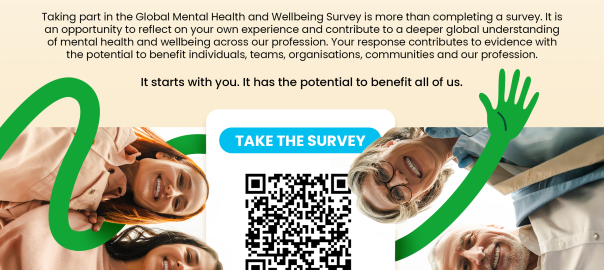
Global Mental Health and Wellbeing Survey launches for PR and communication professionals

For the first time, public relations and communication professionals around the world are being invited to share their experiences as part of a new global study examining mental health and wellbeing across the profession.

The Global Mental Health and Wellbeing Survey opened on 5 October 2026 and is seeking to hear from more than 5,000 PR and communication professionals across seven global regions.

The initiative, led through the Global Alliance for Public Relations and Communication Management (Global Alliance), aims to establish the profession’s first credible global benchmark for mental health and wellbeing.

PR and communication can be rewarding, fast-paced and highly influential, but the nature of the work can also bring significant pressure.

Tight deadlines, demanding stakeholders, always-on communication, crisis situations and the expectation to respond quickly across multiple channels can all contribute to the pressures experienced by people working in the profession.

Yet without robust global data, it is difficult to understand how these experiences differ across countries, sectors, career stages and roles or where the greatest challenges and opportunities for change lie.

That is why broad participation is so important. The survey is designed to capture the experiences of professionals across different markets, cultures, disciplines, sectors and career stages, creating a more comprehensive picture of mental health and wellbeing across the global profession.

Elaine Banoub, Partner at Primary Comms Group said, “For too long, conversations around mental health in public relations have been shaped by individual experiences and anecdotal evidence.

“This survey gives our profession the opportunity to step back and look at the bigger picture, understanding where the challenges are most acute, what is working, and where the industry needs to focus its efforts.”

Have your say

The survey is anonymous and open to PR and communication professionals worldwide. It takes just a few minutes to complete, and every response will help build a stronger evidence base for the profession.

We encourage you to take part and share the survey with colleagues, peers and professional networks.

Take part in the Global Mental Health and Wellbeing Survey here.

The survey closes on 30 November 2026, with the results due to be announced in January 2027 as part of the Global Alliance’s Health and Wellbeing Month.

The findings will provide an important opportunity for the profession to listen to its people; understand the challenges they face and identify where greater support and healthier approaches to working are needed.


Media training is so much more than just memorising key messages 

Media interview techniques and mastering corporate messaging matter but they are not the whole story, they are just one element of effective media training. 

The strongest results come when experienced PR professionals and strategic communicators work together to help a senior spokesperson understand how to best deliver an answer, but also what they need to say, why it matters, who needs to hear it and how it supports the organisation’s broader priorities. 

Some would say that getting this balance right is an art form. 

Our tailored, three-stage Primary Presentation Program brings all these elements together.  

“Effective media, presentation and panel training is about giving leaders the judgement, structure and practical techniques they need to respond clearly and to give them the tools to deliver their corporate messages confidently,” says Frank Coletta, Senior Executive, Strategy & Public Affairs at Primary Comms Group. 

“This is especially the case when the questions are difficult, unexpected or high stakes. The goal is not to simply memorise the ‘right’ answer but to understand what needs to be communicated and how to respond in a way that is clear and authentic.” 

Stage One: Building the strategic foundation 

The process begins well before the first practice interview. 

We work with the client’s team to understand the organisation’s priorities, audiences, risks and any issues a senior spokesperson could reasonably be asked to address. 

Our extensive experience working on issues-rich projects gives us deep expertise in developing clear messaging frameworks, supported by relevant proof points, likely questions and what accessible, easily understood language, looks like. 

Only then do we move into media fundamentals and interview techniques. Our approach helps participants better understand the media (new and legacy) and stakeholder landscapes, how they are evolving in response to changing news consumption habits, and what this means for how organisations communicate and engage with their audiences. 

Stage Two: Putting preparation into practice 

The next stage brings the preparation together through realistic interview scenarios developed around the issues, risks and situations identified through our research. 

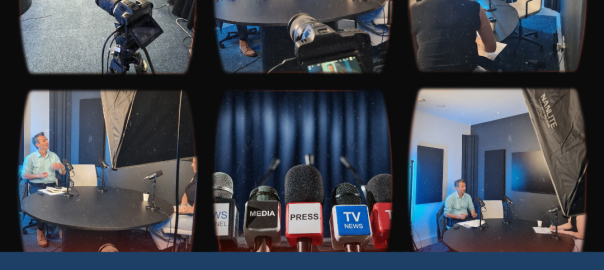
We put participants through their paces in a supportive environment, providing guidance, redirecting where needed and helping establish the practical habits required to respond effectively under pressure. Sessions are often conducted in a professional recording studio to replicate a genuine interview setting. 

Each scenario reflects the organisation’s operating environment, likely pressure points and the scrutiny a spokesperson may face. The exercises test concise media grabs, longer-form responses and the ability to remain calm, clear and authentic when questions become difficult, unexpected or persistent. 

Each interview is recorded and reviewed, with detailed feedback from experienced media and communication professionals. 

“Realistic interview practice is where preparation becomes instinctive. Reviewing a recording allows clients to see what the audience sees, whether the message is clear, if the answer goes on too long and how tone and body language can change under pressure,” he added. 

Reviewing yourself can be uncomfortable, we are all our harshest critics, but it a fundamental part of the process. It reveals where messages were unclear, answers became too complicated, or the tone, pace and body language weakened the delivery. 

This reflection is a great help in refining performance, addressing unhelpful habits and build genuine confidence. 

Stage Three: Reinforcing the learning 

Our training does not end when the formal session concludes. 

Primary’s approach is not “train and forget”. The program is reinforced through follow-up coaching designed to consolidate the learning and help participants continue developing their skills. 

The result is stronger judgement, clearer communication and greater confidence across media, stakeholder, presentation and other public-facing situations. 

A practical exercise  

Before your next interview or public appearance, ask yourself: 

  1. What is the most important thing I want a specific audience to understand and who is that audience? 
  2. What evidence, example or proof point makes that message credible? 
  3. What is the most difficult question I may be asked? 
  4. How can I answer it directly before returning naturally to my central message? 
  5. Then practise your response aloud in no more than 30 seconds. 

We like to provide so-called “hot tips” to the people we work with – for instance, an easy exercise is to record yourself and listen back. Yes, confronting it can be and uncomfortable talking to yourself, but it’s worth it, it works. 

When reviewing, is your main point immediately clear? Do you sound natural? Would someone outside your organisation understand what you mean? It will help you consider what changes you might make when the phone rings unexpectedly and a journalist is on the other end. 

There’s a lot to think about to ensure you are best prepared for that moment, when it comes.

If you are preparing for an upcoming interview, announcement or now find yourself in a high-end public-facing role, contact our team to discuss how our Primary Presentations Program can help. 


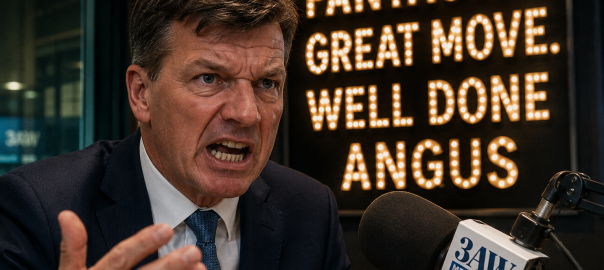
“With all due respect”, Angus, you need to do better

In media interviews, words count, but their delivery often matters more.

Angus Taylor’s turn on Melbourne radio station 3AW last Friday morning was a neat reminder of that brutal truth.

OK, the Federal Opposition Leader has the hardest job in Australian politics. His base is shrivelling like a pappadum in a monocultural microwave oven. Voters are peeling away from the major parties, and One Nation is vacuuming up protest votes.

So off the back of an earlier speech, Taylor came out swinging and turned the blowtorch on One Nation. Host Heidi Taylor pushed back hard. And the more she pressed, the more Taylor sounded irritated.

The giveaway was not any single answer. It was the accumulation. For example, he told the host “look” 17 times. He reached for “well, let’s be clear, let’s be clear here”. He complained: “Heidi, you’ve just verballed me and I’ll push back on this”. And then came the media-training death rattle: “with all due respect”.

That phrase is meant to sound polite. It almost never does. More often, it lands as the verbal equivalent of rolling your eyes.

In another week, it might have cut through, but the media oxygen had already been swallowed by the Prime Minister’s loose-unit podcast performance, criticism of which was drawn-out because his indiscretions took days to register with an inattentive press pack.

Reality is that Taylor’s interview was only a blip in the news cycle, but it made a larger point perfectly; handling hard questions while dragging the conversation back to your message is not instinct. It is craft. And under pressure, command of the craft shows.

Primary Comms Group’s media training builds that craft before the cameras roll. If your next interview needs to go better than Taylor’s did, talk to us about media training.

Craig Regan, Senior Account Director

Primary Comms Group welcomes Hardman Communications

Primary Comms Group has today welcomed the Hardman Communications team into its growing agency, strengthening its specialist capability across the agriculture and industrial sectors. 

Hardman Communications’ people, client partnerships and specialist expertise are now part of Primary Comms Group, a proudly independent Australian-owned integrated communication agency established over 35 years ago. 

This represents another milestone in Primary Comms Group’s growth strategy, creating a broader platform for Hardman’s clients and new opportunities across the agency, while expanding its presence across different sectors.  

It brings together two independent Australian-owned PR agencies with aligned values, relationship-led cultures and a shared focus on quality client service.  

Primary Comms Group CEO Chris Hall said the move will deliver one of the strongest client service offerings of an independent agency for industries that are critical to Australia’s economic success and future prosperity.  

“Primary already supports Australian industries with deep sector expertise across energy, water, aviation, transport, manufacturing, property and cybersecurity. We are incredibly passionate about the role we play supporting businesses, jobs and communities across Australia.  

“Hardman Communications has built an outstanding reputation across the agriculture and industrial sectors and we are delighted to bring this specialist capability into Primary and leverage our combined expertise to strengthen our offering for both traditional and emerging industries where strategy, policy and positioning are key to success.” 

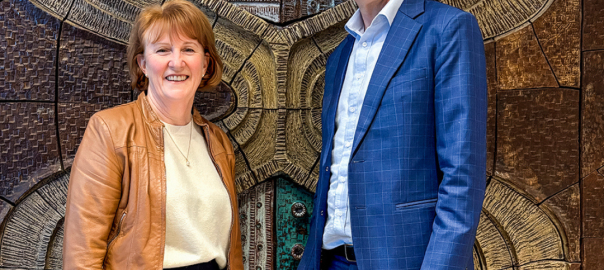
Founder of Hardman Communications and Primary’s Growth & Strategy Director, Sue Hardman said the move recognises the value of supporting niche communication sectors with specific needs. 

“By joining Primary we have secured the scope and scale needed to continue to support the critical agriculture and industrial sectors that are so important to our national economy. For 24 years, Hardman Communications has served clients in these sectors with deep insights, industry connections and a true passion for role they play in providing jobs, putting food on tables, supporting regional industry and maintaining domestic manufacturing capacity. 

“As part of Primary we will be able to give our clients continuity with the people they know, while opening up access to expanded capability across government relations, advocacy, issues management, stakeholder engagement, community consultation and creative services.” 

Primary Comms Group’s offer includes expertise across sectors including energy transition, technology, cybersecurity, aviation, manufacturing, resources, social issues, government, property development, education and sport.

Bounces are a distant memory as NSW Budget lands with a dull thump

The New South Wales State Budget has landed with all the fanfare of a Temu package tossed onto the front porch by a harried delivery driver.

It’s not that Treasurer Daniel Mookhey hasn’t been working to sell the Minns Government’s last big economic announcement before the March 2027 State Election.

All but a handful of spending measures were unveiled in the week before and the media reception has been muted, at best.

That’s how it goes for governments these days. You’d have to go back to the Howard and Rudd eras to find examples of Budgets that prompted a positive bump in polling numbers. The polling isn’t yet in but it would be stunning if this one broke the mould.

Treasurer Mookhey’s fourth Budget projected the image of a government going about the business of fiscal repair. It predicts an operating deficit of approximately $2.3 billion before returning to surplus in 2027–28.

The Budget delivers significant new spending in health, education and transport, domestic and family violence services and hands out modest offsets to household travel expenses.

It also contains just under a billion dollars in unannounced spending that we’ll hear more about as the election draws closer. Much of it will be allocated to infrastructure in marginal seats on Sydney’s growing fringes, where the threat of One Nation is greatest.

Mookhey says NSW is experiencing  “booming investment by private investment in renewable energy and AI-related infrastructure”. His Budget papers predict the State’s economy is slowing…without saying by how much.

To be fair, there’s not a lot a State can do to supercharge its own growth when the national GDP was + 0.2 percent in the last quarter with annual growth crawling at +1.3 percent.

But if there’s a silver bullet for suddenly reviving productivity, you won’t find it in the NSW Budget papers.

Craig Regan, Senior Account Director

Image: AI generated