All posts by adcreators

Primary shortlisted for CPRA Golden Target Awards

Celebrating our work on the Australian Remembrance Foundation: Harbour Sunset Tribute

Primary is proud to announce we’ve been shortlisted for the CPRA Golden Target Awards for our work on the Australian Remembrance Foundation: Harbour Sunset Tribute.

This campaign reimagined how Australians commemorate the ANZAC tradition, on the eve of the day itself. Traditionally, remembrance has centred around the dawn service, but as the Ode reminds us, “At the going down of the sun, and in the morning, we will remember them.”

The Harbour Sunset Tribute brought new meaning to those words, introducing Australia’s first ANZAC Eve commemoration at the Sydney Opera House.

With a four-week window and limited resources, Primary’s challenge was to launch a completely new event with a new name, time, day and location, while inspiring Australians to see ANZAC Eve as a powerful moment for reflection.

We built our media campaign in the lead-up through authentic storytelling, uncovering a central emotional insight through interviews with veterans, their families and Patron Sir Peter Cosgrove.

Through a targeted and creative approach, we:

  • Helped secured strategic media partnerships with the likes of the Seven Network, Sky News and The Daily Telegraph, ensuring consistent national visibility.
  • Generated 152 pieces of media coverage across print, broadcast, online and social.
  • Built momentum in the press through the various campaign elements to help achieve a sell-out event within two weeks.
  • More than doubled audience viewership, with nearly 500,000 Australians tuning in to the televised tribute.

The Harbour Sunset Tribute demonstrated how creativity, collaboration and storytelling can achieve national impact. The campaign not only exceeded all objectives, it helped establish a new Australian tradition of remembrance.

We’re very proud of this recognition and grateful to the Australian Remembrance Foundation for entrusting us with this important work.

Congratulations to all fellow finalists.

The future of news and strategic communication

There’s no doubt about it; we live in an attention economy. A digital world inundated with content from all fronts. From election campaigns to controversial denim campaigns, we’ve seen untoward tactics used to capture mindshare in an age where virality is king.  

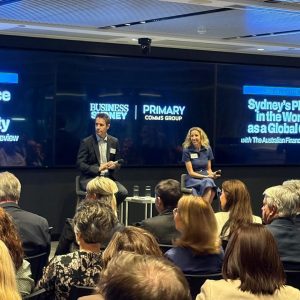
Australia’s fragmented media landscape is in flux. At a recent media conference, Influencing Live, journalists shed light into emerging trends and the challenges and opportunities facing the modern newsroom. Trust in journalism is under strain, digital content and new technologies like AI are reshaping how news is produced and consumed, and regulators are struggling to keep pace with digital platforms and capabilities.  

For PR and communication professionals, this means re-thinking how we work with media to build and maintain credibility in a crowded and sceptical landscape.  

Australian newsrooms are facing a dilemma. The big question is how to stay relevant in an oversaturated media landscape, and hold onto the credibility that keeps audiences engaged, while also navigating shrinking budgets in one of the world’s most concentrated media markets.  

Traditional outlets have had to adapt, producing more snackable video content designed to fit algorithms and feeds. Visibility is no longer decided on the front page, but by algorithms and search results, including AI search engines. SEO, thumbnails and trending tags are crucial to how news stories are circulated but risk prioritising clickbait over context which can reinforce distrust, cynicism and algorithmic echo-chambers.  

This year, we saw social media influencers and new media groups flown to the federal budget lock-up in Parliament House and political candidates join popular mainstream podcasts in the lead up to the election. Opportunities once reserved for traditional media outlets have been extended to content creators to engage younger audiences.  

More and more Australians report social media as their main source of news over online news websites and apps, highlighting the new rules of digital PR 

At the same time, social media is a hotbed for mis- and disinformation. “Fake news”, propaganda, online radicalisation, increasingly believable deep fakes and harmful content spreads like wildfire on digital platforms.  

Australia’s inbound age-verification laws for under 16s and the broader online safety debate will impact how content is distributed by digital platforms. As government move to hold tech giants to account, policymakers must toe the line between protecting young Australians and preserving our privacy and freedoms. 

If distrust, fatigue and misuse of technology continue to dominate the narrative, we risk further fragmentation with portions of our population disengaged and misinformed. 

But it’s not all gloom and doom – there’s a chance for a news ecosystem that is more accessible and more resilient. Rebuilding trust will require transparency, investment in media literacy, and sustainable business models that reward quality over clicks.  

Some newsrooms are adapting to the changing media landscape and differentiating brand identity with commercial, content, and engagement strategies, including: 

  • Personal branding and perspective-led content to build authenticity and trust with audiences, serving as a key point of difference in an overcrowded landscape 
  • Leveraging video content to meet audiences where they are 
  • Adopting AI-driven tools to enhance production workflows and implementing AI search optimisation strategies, in addition to SEO, to extend reach. 
  • Implementing subscription-based funding models that prioritise a renewed focus on high-quality content, over clicks, in turn building segmented audiences. 

For Australian businesses and government organisations looking to stand out, it’s worth asking: do your PR professionals offer more than media relationships? Do they bring credibility, a commitment to responsible storytelling and an understanding of how audiences are consuming news in today’s environment? 

Olivia Hammond, Account Manager, Primary Comms Group  


When trust walks out the door it’s hard to persuade it to return

The most telling aspect of the Optus Triple O bungle is how the company’s first faltering steps last Friday have defined the whole sorry chain of events. Those of us in corporate communication for more than a hot minute have seen this movie before, so it wasn’t a shock.

If you’re going to call a media conference at the media witching hour of 5.30pm on a Friday afternoon, at least be in control and look decisive. The crisis had been playing out for more than a day, and Optus was neither.

The cardinal rule of crisis management is that you must do something meaningful and positive to make a situation right. You must own it, even when it’s not your fault.

Optus was clear that its failed systems were to blame but actions speak volumes, louder than words. Expressing regret for people dying rings hollow if you haven’t even tried to contact families of the deceased.

The involvement of overseas call centres was a lightning rod for public anger because who hasn’t experienced an operator (foreign or onshore) who isn’t able or empowered to help?

But not telling the regulator and governments about something that’s gone horribly wrong on their watch? Inexcusable when your track record already screams that you can’t be trusted.

Optus has been working to rebuild market confidence after being hit by one of Australia’s biggest cyber-attacks and suffering a 14-hour network outage that cost millions of dollars in fines.

Most commentators have missed the fact that in June, Optus agreed to a fine of $100m for unconscionable conduct for selling mobile services to people who could not afford them.

The irony is that three months ago, Optus replaced its marketing and advertising agencies after a sweeping review. They’ll have their work cut out for them.

Craig Regan, Senior Account Director, Primary Communication

How thought leadership elevates your PR program

In today’s fast-paced media landscape, announcing your news is no longer enough. To truly stand out, brands must shape the conversation, not just participate in it. That’s where thought leadership comes in. Far from a buzzword, it’s become a vital component of any effective PR strategy.

At Primary, we believe it is essential to integrate thought leadership into your PR efforts. It is not just a value-add but a competitive necessity that drives real impact from media visibility to long-term brand authority.

Thought leadership isn’t about self-promotion. It’s about providing value by offering insight, expertise, and foresight that informs, challenges, and inspires your audience. In a world saturated with content, thought leadership can:

  • Enhance credibility by positioning your brand and executives as trusted sources of expertise.
  • Build trust with key stakeholders, including media, customers, investors, and regulators.
  • Differentiate your brand in crowded, competitive markets by leading conversations rather than reacting to them.

Incorporating thought leadership into PR transforms your media outreach from reactive storytelling into proactive influence-building.

A strong thought leadership piece does more than present opinions. It delivers original, timely, and insightful commentary that helps the audience understand complex issues or navigate industry challenges. Whether it’s a bylined article, LinkedIn post, interview, or op-ed, great content:

  • Addresses timely issues or trends
  • Offers a unique perspective or data-backed insights
  • Aligns with broader brand values and positioning
  • Sparks conversation or reflection

For example, a well-crafted thought leadership article on the future of AI in logistics not only shares technical knowledge but also discusses implications for safety, compliance, and workforce development, making it relevant, strategic, and shareable.

A great thought leadership strategy doesn’t end with media placement. It can and should be repurposed and amplified across:

  • LinkedIn: Executive commentary can drive engagement, expand professional networks, and boost employer branding.
  • Industry events: Turn articles into speaking points or panel topics.
  • Owned media: Republish or expand pieces on your company blog or in newsletters.

The goal is to create a feedback loop where every piece of content reinforces your positioning and expertise and opens doors for engagement.

Whether you’re a startup trying to get noticed or an established company working to stay top-of-mind, thought leadership can be the difference between blending in and leading the way.

A focused thought leadership strategy, anchored in authenticity and aligned with business goals, can transform traditional PR into a long-term engine for influence, authority, and trust.

Ready to build your brand’s voice of authority? Contact us today!

Courtney Trewin, Account Manager

Internship program: Learning the art of strategic communication at Primary Comms Group

If you’re studying communication, PR, or marketing, you know how valuable internships are for landing your dream role, and nothing compares to real hands-on experience. With so many career paths, it can be hard to know where to start, but I am so glad that I landed an internship at Primary Comms Group. While it wasn’t required for my Strategic Communications degree at UTS, I wanted deeper industry insight, and this internship has been the perfect way to give me hands-on experience and real-world insights that have helped me kickstart my career.

Primary Comms Group has given me insight into agency life, but has also shown me how rewarding an internship can be with the right support.

Why Primary?
Initially, I was drawn to Primary because of its different specialties within the company. Primary also has three arms: Primary Communication for PR and GR, Primary Create for all things design and advertising, and community engagement specialist, Primary Engage. I wanted to gain experience across all areas of agency life while broadening my understanding of communication.

I was intrigued by the breadth of clients Primary works with across a variety of industries, including aviation, transport and logistics, tech, and clean energy.

Ultimately, when the opportunity to apply for an internship at Primary came up, I knew I had to apply.

A day in the life
At Primary, interns undertake a variety of work. Some days I’m glued to my desk for hours, powering through tasks and research for clients, and other days are a slightly slower pace, with more of my time spent on office admin.

It’s this mix of really fast-paced days and quieter ones that has given me such a well-rounded view of agency life.

For the first few weeks, I was doing phone outreach to stakeholders for a large client project. This was an extremely rewarding introduction to agency life as I was able to build my confidence over the phone, while also helping the team project manage such a large-scale initiative.

One of my personal favourite tasks was completing research that would then go on to become a part of a credentials document for prospective clients. It was great to see how various elements came together to complete a pitch document.

The variety doesn’t stop there. Each project seems to open a new door into a different corner of the industry.

Media campaigns are a different kind of a beast! From ensuring media lists are pristine and up to the minute to monitoring and tracking coverage during and post campaigns, it all worked to practice the theory of tertiary education. My colleague Veronica summed it up well when she said, “The process is so tailored and detail oriented. I am sure even the client would be surprised at the level of detail and follow through involved, and about their presence online and in the marketplace.”

The insight into agency work has been invaluable, and I can truly say I’ve developed essential professional skills.

Importantly, the mentoring and guidance from the team has given me valuable context for the different elements I’ve been working on. While some tasks may have felt menial or mundane at first, I came to see that each played a role in the bigger picture of the work delivered to clients. Even the smallest jobs, whether keeping the office running smoothly, organising the storeroom, or making the all-important morning coffee run, helped keep the agency humming along.

I feel more confident about the next step; my writing skills have sharpened, my research abilities have improved, I now know not just what to look for, but how to find it effectively and I have discovered the importance of attention to detail!

I’ve learned the importance of backing myself and not being afraid to ask questions. The team is always there to oversee my work, and showing initiative is encouraged. At worst, I get corrected but even then, I’m mentored through the process and shown how to strengthen my work.

The transferable skills I’ve developed have also been incredibly valuable. Time management has been key. Some days are a whirlwind of writing and back-to-back deadlines, while others are slower and focused on laying the groundwork for future projects.

My colleague Lucy put it perfectly saying, “learning to be flexible and adaptable is essential because things often don’t follow a set schedule. Being able to think on your feet and change direction when needed is a skill that will serve me well in any career.”

Primary will always support you
If someone was to ask me what my favourite thing about Primary is, it would honestly be the people. Everyone at Primary has been super supportive and patient. I’m always getting constructive feedback that’s helping me grow and learn. My team not only backs me but recognises the work I put in and advocates for me.

The level of mentorship at Primary is extremely valuable. I am always receiving in-depth briefs for my tasks, anyone and everyone is willing to answer questions and overall makes this internship the best possible learning experience.

Lucy summed it up perfectly when she said, “coming into a new workspace can be intimidating, especially as a newbie, yet the Primary team makes you feel welcome and valued.”

Callum, a fellow intern, shared a similar thought, “This internship has really opened the door into agency life.” He admitted that without the support and guidance from the team, the experience wouldn’t have been nearly as rewarding.

My internship at Primary Comms Group has been more than just work experience. It’s been a genuine step into the world of PR. I’ve learned skills I’ll carry into any role, but more importantly, I’ve discovered where I see myself growing in the industry.

Primary has just been the perfect starting point.

Greta Kasprowicz, Intern

The criticality of Quality Assurance (QA)

In any organisation, the transmission of information or advice, whether internal or external, is only as strong as the accuracy, clarity, and consistency of the documentation which supports it. From the simple email or the detailed report to standard operating procedures and public-facing communication, the role of quality assurance (QA) in information flow is not a luxury; it is a non-negotiable, it is a necessity.

Call it by any other name – attention to detail, a meticulous approach, highest standards or a sharp eye – it is a fact that QA is often undervalued or seen as little more than a post-process activity rather than a fundamental first-point and foundational part of communication delivery. The mindset that “near enough is good enough” is disturbing and moreover creates unnecessary risk. Those risks include, at the most basic level, double handling, ergo – the need to redo work; to creating confusion and misunderstanding, and causing reputational damage. In professional environments where clarity underpins success, QA should not be optional. It is a critical component in successful outcomes and should be viewed as a pillar of any corporate model.

We know that every communication in a business sets off a chain reaction, good and bad. A vague policy update can result in inconsistent interpretations across teams and even a simple typo in a report can set off a ripple effect, casting doubt on the professionalism and credibility of an entire organisation.

Where clear, concise and accurate information flow drives decision-making, compliance, and service delivery, there is no room for ambiguity. Quality assurance ensures that what is written is accurate, consistent, and unambiguous. It safeguards the organisation’s intent and makes sure that what people read is what was intended.

In spite of all this, one of the most common mistakes is that sum still treat QA as a final step; a proofread before sending or publishing. In reality, QA should be built into every stage of documentation. It starts with asking the right questions: Who is the audience? What do they need to understand? What is the objective? What risks could arise from miscommunication?

From drafting and reviewing to editing and sign-off, each phase of content creation should involve checks for clarity, accuracy, relevance, tone, and consistency. When QA becomes a mindset rather than a tick-box exercise, the result is higher-quality communication that builds trust.

Documentation is more than just admin. At its best, it is a strategic asset. From an internal perspective, high-quality documentation ensures that onboarding is smoother, knowledge is retained, handovers are cleaner, decisions are traceable, and compliance is demonstrable. It ensures that the intellectual property of an organisation doesn’t walk out the door with a former employee. When QA is applied consistently, it protects institutional memory and supports operational resilience.

Effective QA is not limited to spelling and grammar, so the clicking on the Editor to check Spelling and Grammar, simply doesn’t cut it. QA covers a broad set of checks and balances, including:

– Fact-checking to confirm technical accuracy
– Consistency in terminology, formatting, and tone (including uniform naming conventions)
– Clarity testing to ensure the message is understood by the intended audience
– Version control and traceability to support transparency
– Streamlined communication tools so everyone is literally on the same page
– Feedback loops so content stays relevant and reflects reality; and,
– Defined approval workflows with accountable reviewers

While tools like templates and collaborative editing platforms can support the process, lasting impact comes from a shared commitment to getting it right every time.

In a world where clear communication sets the course, quality assurance isn’t optional; it’s the quiet engine that keeps everything moving in the right direction. Some might dismiss it as pedantry, but attention to detail and delivering a high-quality product should be the baseline expectation for any client investing in our expertise.

Ensuring QA is baked into your daily routine is not being overly meticulous, it’s about professionalism, valuing precision, and taking accountability.

It’s about doing the job right, the first time, because the outcome matters and our aim should always be to make great things happen.

Frank Coletta, Senior Executive, Strategy & Public Affairs

Why brands must embrace the new rules of digital PR

The way audiences consume information has changed dramatically, and so too are the ways companies and brands must communicate. They can no longer rely on traditional broadcast or even digital publishing to drive relevance. In an environment where audiences scroll more than they read, digital PR now demands speed, authenticity and influence, delivered in real time.

This year, social media officially overtook online news websites as Australians’ main source of news (26% vs. 23%). Facebook use for news jumped 6 per cent to 38 per cent, while Instagram and TikTok now reach 40 per cent and 36 per cent of 18-24 year-olds respectively. Young audiences are turning to short-form video, creators and influencers to shape their understanding of current events, particularly on platforms like TikTok, where over a third of young Australians consume news content.1

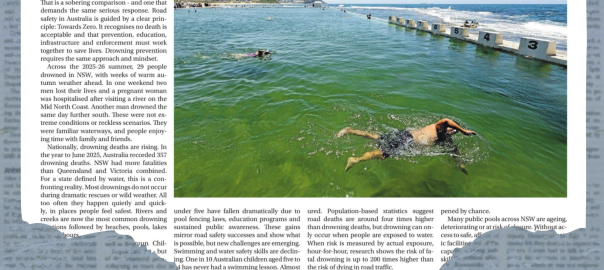
For PR professionals, visibility means more than coverage. It’s about performance. Social content is not just resharing a press clipping, it’s where influence is built. Our work with Royal Life Saving NSW is one example, where traditional coverage was supported by TikTok creator Sam Fricker’s engaging, creator-led content. These voices are trusted, relatable, and central to digital reach.

The appetite for real-time, responsive content is growing. Australians now spend more time on social media than ever with TikTok, Facebook, and Instagram dominate screen time, and they expect brands to be present and participatory. Static campaigns are falling flat. It’s real-time relevance that builds momentum and credibility.

The creator economy reflects this shift. In a climate where younger Australians say influencers are among the most common sources of misinformation (57%)[1], trust hinges on authenticity. Co-created content offers brands and companies a way to show up with personality and purpose.  As short-form video continues to rise, the most effective PR strategies prioritise partnership over promotion.

This is especially important for reaching younger audiences, many of whom avoid news altogether. 71 per cent of under-35s say they tune out because it feels negative, irrelevant or hard to follow1. The opportunity? Tell stories that resonate. Keep it visual, digestible and authentic.

PR has evolved. Winning attention now depends on agility, credibility and emotional connection. The brands and companies who adapt this new rhythm won’t just survive the digital age, they’ll lead it.

Ready to make great things happen? Let’s talk: primary@primarycommsgroup.com.au

Mary-Anne Boustany, Account Director

[1] Digital News Report: Australia 2025, University of Canberra

Mastering the media pitch: How we help you cut through a crowded news cycle

In today’s fast-moving media landscape, securing earned coverage isn’t just about having a good story. It is about knowing how to tell it, who to tell it to, and when. With newsroom resources under pressure and journalist inboxes overflowing, media pitching is more competitive than ever. But with the right approach, it’s still one of the most valuable tools in your PR toolkit.

Recent research from Muck Rack’s State of Journalism 2024 found that almost half of all journalists receive 30 pitches per week, many of which are irrelevant, overly promotional or poorly timed. Standing out requires precision.

It starts with a newsworthy angle. Journalists want stories that inform or impact their audience, such as commentary on breaking developments, new research, or unique local perspectives. It’s not about what you want to say, but about what your public needs to hear, and why now.

Then, there is clarity. In the same Muck Rack report, journalists said the most common pitch mistake is lack of relevance or poor fit for their beat[1]. That’s why pitches must be concise, tailored, and immediately clear on value.

Timing and follow-up is also critical. Journalists are more likely to respond to pitches that relate to trending stories. The media cycle moves fast. If you miss the window, the story is gone.

Relationships make a huge difference. Building trust with journalists over time increases the chance of your pitch being opened and acted on.

A recent example from our team shows this in action. When news broke of a major cyber incident, we swiftly positioned Claroty’s Vice President ANZ, Leon Poggioli, as an expert to speak on the implications of the breach. Within hours, our targeted, timely pitch led to live coverage on 9News, and subsequent broadcast coverage in the weeks following for an update. The win wasn’t just the result of having the right spokesperson, but of strategic, responsive storytelling and strong media relationships.

A PR agency like Primary Comms Group, brings the insight, access and agility required to secure these opportunities. We know how to craft the right narrative, target the right journalist, and time the pitch perfectly.

Want to position your brand in front of the right audience, at the right time? Contact us today!

Courtney Trewin, Account Manager


[1] State of Journalism 2024, Muck Rack

Kiss or miss? Coldplay cam a sign of the times

Australians claiming Tall Poppy Syndrome is a uniquely Australian trait has always been a myth and it’s now been thoroughly exposed by the Coldplay Kiss Cam saga.

The issue dominated most people’s internet feeds late over the weekend and continues to do so this week. Three days in, the video had been shared 100 million times and spawned almost as many memes.

Most of the world revelled in a rare moment of global unity, seeing a rich tech guru taken down by his own actions. The world’s joy was compounded by his love rat status.

CEO Andy Byron’s resignation wasn’t a surprise. The shock was how long it took.

Attention quickly moved to Chief People Officer Kristin Cabot and then a grinning colleague, also captured on camera who was pegged as being an accessory for not blowing the whistle on the couple. Her fate now hangs in the balance.

Who knew the company they all worked for, Astronomer, or what it did? Ironically, Wikipedia is now debating whether the start-up deserves a page in its own right.

Plenty of crisis managers have weighed in on the issue (and shoot me if I refer to it as “Coldplay-gate”) and they’re all stating the obvious by saying Byron needed to own the problem and show immediate contrition.

Even that wouldn’t have saved his skin.

In the same spirit, here’s some free advice for the Board that Byron left behind.

Being a billion dollar company means you’ll survive. Cabot and or Byron won’t fare so well but selling the rights to their story will tide them over for a while. After that, reality TV awaits with a new US season of Love Island a possibility.

This was none of the Board’s doing but you still need to conduct a short, sharp inquiry. This will lead to a root-and-branch review of your corporate culture.

You should then appoint a new CEO and let her drive a restructure that Astronomer has changed for the better.

Lean on Coldplay to license you some of their aural wallpaper, sorry music, pro bono for a bold marketing campaign. Positioning in the market is advisable in case Andy Byron runs as an Elon Musk-backed candidate in the US mid-term elections.

Craig Regan, Senior Account Director, Primary Communication


The need for speed: a case study in successful real-time media response

Tapping into current events in the media to gain visibility is still one of the best ways to secure media coverage. But how can your brand cut through the noise and be heard?

One great example is our work with cybersecurity firm Claroty during the Qantas cyber attack a few days ago, on 2 July. Thanks to rapid response skills and strong media relationships, we secured a primetime TV spot during coverage of the breach, which exposed the personal data of up to 6 million customers (see video below).

The Primary team pitched Claroty’s Vice President ANZ, Leon Poggioli, as an expert to speak on the implications of the breach, how Qantas customers can keep themselves safe, and why hacking groups are increasingly targeting airlines.

The result? Two interviews on Channel 9 and Channel 7 News, with one segment syndicated nationally and seen by over 1.3 million Australians.

Repetition is key

At Primary, we work consistently to position our clients as go-to experts in their industry. Our goal is to ensure that when news breaks, journalists already know who to call.

In this case, we had already been working with Claroty to build credibility in the media, and we were able to capitalise on that by offering a trusted voice at exactly the right moment. Media trust is earned through repetition, reliability, and relevance. Gentle persistence and smart positioning are key to keeping your brand front of mind. But that’s only the first piece of the puzzle.

Timeliness of the pitch

When a news story breaks, the window to act is small. Editors and producers are moving quickly and if your pitch doesn’t land within hours, the opportunity is gone.

That’s why our team:

  • Monitors breaking news in real time
  • Prepares expert commentary and spokespeople in advance
  • Moves fast to pitch relevant, informed voices to key journalists

With newsroom deadlines tighter than ever, speed and precision matter. We make sure your brand is ready to respond, and fast.

Spokesperson readiness and comfort level

Good opportunities strike when you least expect them!

Your spokesperson needs to be confident, concise, and clear, and ready to jump into an interview or answer difficult questions with ease. They must be able to think on their feet and recall key company messages at short notice.

Luckily, media training can help anyone become a pro! Primary Comms Group offers intensive media training, delivered by former journalists who work in our team.

Looking for a PR agency to make great things happen like this? Contact us today: primary@primarycommsgroup.com.au or 02 9212 3888.


Video courtesy of 9 News