All posts by adcreators

Why brands must embrace the new rules of digital PR

The way audiences consume information has changed dramatically, and so too are the ways companies and brands must communicate. They can no longer rely on traditional broadcast or even digital publishing to drive relevance. In an environment where audiences scroll more than they read, digital PR now demands speed, authenticity and influence, delivered in real time.

This year, social media officially overtook online news websites as Australians’ main source of news (26% vs. 23%). Facebook use for news jumped 6 per cent to 38 per cent, while Instagram and TikTok now reach 40 per cent and 36 per cent of 18-24 year-olds respectively. Young audiences are turning to short-form video, creators and influencers to shape their understanding of current events, particularly on platforms like TikTok, where over a third of young Australians consume news content.1

For PR professionals, visibility means more than coverage. It’s about performance. Social content is not just resharing a press clipping, it’s where influence is built. Our work with Royal Life Saving NSW is one example, where traditional coverage was supported by TikTok creator Sam Fricker’s engaging, creator-led content. These voices are trusted, relatable, and central to digital reach.

The appetite for real-time, responsive content is growing. Australians now spend more time on social media than ever with TikTok, Facebook, and Instagram dominate screen time, and they expect brands to be present and participatory. Static campaigns are falling flat. It’s real-time relevance that builds momentum and credibility.

The creator economy reflects this shift. In a climate where younger Australians say influencers are among the most common sources of misinformation (57%)[1], trust hinges on authenticity. Co-created content offers brands and companies a way to show up with personality and purpose.  As short-form video continues to rise, the most effective PR strategies prioritise partnership over promotion.

This is especially important for reaching younger audiences, many of whom avoid news altogether. 71 per cent of under-35s say they tune out because it feels negative, irrelevant or hard to follow1. The opportunity? Tell stories that resonate. Keep it visual, digestible and authentic.

PR has evolved. Winning attention now depends on agility, credibility and emotional connection. The brands and companies who adapt this new rhythm won’t just survive the digital age, they’ll lead it.

Ready to make great things happen? Let’s talk: primary@primarycommsgroup.com.au

Mary-Anne Boustany, Account Director

[1] Digital News Report: Australia 2025, University of Canberra

Mastering the media pitch: How we help you cut through a crowded news cycle

In today’s fast-moving media landscape, securing earned coverage isn’t just about having a good story. It is about knowing how to tell it, who to tell it to, and when. With newsroom resources under pressure and journalist inboxes overflowing, media pitching is more competitive than ever. But with the right approach, it’s still one of the most valuable tools in your PR toolkit.

Recent research from Muck Rack’s State of Journalism 2024 found that almost half of all journalists receive 30 pitches per week, many of which are irrelevant, overly promotional or poorly timed. Standing out requires precision.

It starts with a newsworthy angle. Journalists want stories that inform or impact their audience, such as commentary on breaking developments, new research, or unique local perspectives. It’s not about what you want to say, but about what your public needs to hear, and why now.

Then, there is clarity. In the same Muck Rack report, journalists said the most common pitch mistake is lack of relevance or poor fit for their beat[1]. That’s why pitches must be concise, tailored, and immediately clear on value.

Timing and follow-up is also critical. Journalists are more likely to respond to pitches that relate to trending stories. The media cycle moves fast. If you miss the window, the story is gone.

Relationships make a huge difference. Building trust with journalists over time increases the chance of your pitch being opened and acted on.

A recent example from our team shows this in action. When news broke of a major cyber incident, we swiftly positioned Claroty’s Vice President ANZ, Leon Poggioli, as an expert to speak on the implications of the breach. Within hours, our targeted, timely pitch led to live coverage on 9News, and subsequent broadcast coverage in the weeks following for an update. The win wasn’t just the result of having the right spokesperson, but of strategic, responsive storytelling and strong media relationships.

A PR agency like Primary Comms Group, brings the insight, access and agility required to secure these opportunities. We know how to craft the right narrative, target the right journalist, and time the pitch perfectly.

Want to position your brand in front of the right audience, at the right time? Contact us today!

Courtney Trewin, Account Manager


[1] State of Journalism 2024, Muck Rack

Kiss or miss? Coldplay cam a sign of the times

Australians claiming Tall Poppy Syndrome is a uniquely Australian trait has always been a myth and it’s now been thoroughly exposed by the Coldplay Kiss Cam saga.

The issue dominated most people’s internet feeds late over the weekend and continues to do so this week. Three days in, the video had been shared 100 million times and spawned almost as many memes.

Most of the world revelled in a rare moment of global unity, seeing a rich tech guru taken down by his own actions. The world’s joy was compounded by his love rat status.

CEO Andy Byron’s resignation wasn’t a surprise. The shock was how long it took.

Attention quickly moved to Chief People Officer Kristin Cabot and then a grinning colleague, also captured on camera who was pegged as being an accessory for not blowing the whistle on the couple. Her fate now hangs in the balance.

Who knew the company they all worked for, Astronomer, or what it did? Ironically, Wikipedia is now debating whether the start-up deserves a page in its own right.

Plenty of crisis managers have weighed in on the issue (and shoot me if I refer to it as “Coldplay-gate”) and they’re all stating the obvious by saying Byron needed to own the problem and show immediate contrition.

Even that wouldn’t have saved his skin.

In the same spirit, here’s some free advice for the Board that Byron left behind.

Being a billion dollar company means you’ll survive. Cabot and or Byron won’t fare so well but selling the rights to their story will tide them over for a while. After that, reality TV awaits with a new US season of Love Island a possibility.

This was none of the Board’s doing but you still need to conduct a short, sharp inquiry. This will lead to a root-and-branch review of your corporate culture.

You should then appoint a new CEO and let her drive a restructure that Astronomer has changed for the better.

Lean on Coldplay to license you some of their aural wallpaper, sorry music, pro bono for a bold marketing campaign. Positioning in the market is advisable in case Andy Byron runs as an Elon Musk-backed candidate in the US mid-term elections.

Craig Regan, Senior Account Director, Primary Communication


The need for speed: a case study in successful real-time media response

Tapping into current events in the media to gain visibility is still one of the best ways to secure media coverage. But how can your brand cut through the noise and be heard?

One great example is our work with cybersecurity firm Claroty during the Qantas cyber attack a few days ago, on 2 July. Thanks to rapid response skills and strong media relationships, we secured a primetime TV spot during coverage of the breach, which exposed the personal data of up to 6 million customers (see video below).

The Primary team pitched Claroty’s Vice President ANZ, Leon Poggioli, as an expert to speak on the implications of the breach, how Qantas customers can keep themselves safe, and why hacking groups are increasingly targeting airlines.

The result? Two interviews on Channel 9 and Channel 7 News, with one segment syndicated nationally and seen by over 1.3 million Australians.

Repetition is key

At Primary, we work consistently to position our clients as go-to experts in their industry. Our goal is to ensure that when news breaks, journalists already know who to call.

In this case, we had already been working with Claroty to build credibility in the media, and we were able to capitalise on that by offering a trusted voice at exactly the right moment. Media trust is earned through repetition, reliability, and relevance. Gentle persistence and smart positioning are key to keeping your brand front of mind. But that’s only the first piece of the puzzle.

Timeliness of the pitch

When a news story breaks, the window to act is small. Editors and producers are moving quickly and if your pitch doesn’t land within hours, the opportunity is gone.

That’s why our team:

  • Monitors breaking news in real time
  • Prepares expert commentary and spokespeople in advance
  • Moves fast to pitch relevant, informed voices to key journalists

With newsroom deadlines tighter than ever, speed and precision matter. We make sure your brand is ready to respond, and fast.

Spokesperson readiness and comfort level

Good opportunities strike when you least expect them!

Your spokesperson needs to be confident, concise, and clear, and ready to jump into an interview or answer difficult questions with ease. They must be able to think on their feet and recall key company messages at short notice.

Luckily, media training can help anyone become a pro! Primary Comms Group offers intensive media training, delivered by former journalists who work in our team.

Looking for a PR agency to make great things happen like this? Contact us today: primary@primarycommsgroup.com.au or 02 9212 3888.


Video courtesy of 9 News

NSW Treasurer joins UDIA NSW Winter Luncheon to spotlight housing and infrastructure reform 

Earlier today at the Four Seasons Hotel in Sydney, UDIA NSW hosted its annual Winter Luncheon with special guest speaker, the NSW Treasurer, the Hon. Daniel Mookhey MLC. 

In a keynote that zeroed in on one of the challenges of our time, housing, the Treasurer addressed the pressing need to ensure more people in the State have a place to call home. He was clear: without enough housing for the people who keep the State running, the State faces not just a housing crisis, but an economic one. 

The Treasurer used the platform to outline how the 2025–26 NSW Budget demonstrated the Minns Government’s commitment to tackling the housing crisis. 

He spoke of the security of a house, the social cohesion it provides and that there is a critical need to “make sure we are building more homes” and went on to add that his budget will help build more homes, more of the skills needed and that “builds confidence”. 

He acknowledged that the Government’s policy direction has been shaped by strong industry advocacy noting UDIA’s role in securing key reforms. Among the initiatives highlighted were: 

  1. Pre-Sale Finance Guarantee – the Treasurer confirmed that this was directly influenced by industry advocacy, including that of UDIA NSW. Under this policy, the NSW Government will act as guarantor for up to 50% of approved housing projects, unlocking finance for developers and helping to accelerate the delivery of 15,000 new homes over five years. 
  1. Works-In-Kind Policy – Mr Mookhey also recognised the influence of UDIA NSW in progressing this initiative, allowing developers to directly deliver vital infrastructure such as roads, parks and services in place of monetary contributions. He credited UDIA NSW CEO Stuart Ayres and the team for putting it “on the radar”. 

In a candid panel discussion, the Treasurer emphasised the importance of robust and credible advocacy, saying: “I am sceptical, but I listen” while pointing out to the floor that they should “expect rigour” around their recommendations. 

He also spoke about broader economic pressures, including the impact of the recent GST distribution decision, which he said represented a larger revenue loss to NSW than either COVID-19 or the Global Financial Crisis. NSW has lost a gross $12.3 billion in revenue but remains the only state to have lowered its debt forecast. 

On the topic of workforce capacity, Mr Mookhey was blunt, “We don’t have enough construction workers in NSW.”

He noted the State’s current construction workforce of 400,000 is insufficient to meet the housing, infrastructure and disaster-recovery needs, pointing to substantial TAFE investment as a key response. 

Importantly, he outlined the role of the new Investment Delivery Authority, inspired by the Housing Delivery Authority model, which will focus on non-residential projects over $1 million, aligning them with growing communities and the infrastructure they need. 

Closing the event, the Treasurer reaffirmed the government’s growth-focused mindset and promised continued reform in the planning system saying the challenge of housing won’t be fixed in one budget but added, “We are serious about solving the housing crisis.” 

The Primary Comms Group team was on the ground to support UDIA NSW and connect directly with the Treasurer following the on-stage Q&A, continuing the conversation around housing, reform and progress. 


Still a lot more to do to solve this housing crisis 

When we have a crisis, the response is urgent, action is swift, and the full weight of government is deployed to solve the crisis. Think bushfires, floods and in more recent memory the impact of and response to the pandemic. The only crisis that doesn’t seem to meet with the same level of urgency is the housing supply crisis.  

While paved with good intentions, earlier budgets have been more window dressing when it comes to housing supply.  

The Governments own housing target is 75,000 new homes completed every year between now and 2029. NSW is barely completing 40,000. Without urgent and swift action NSW will keep falling behind its targets and homes will continue to become less affordable for everyday Australians. 

The billion-dollar apartment pre-sale finance guarantee is a genuine supply side initiative that will help get many projects under construction faster. It’s a smart use of the Governments balance sheet.  

It is really needed too. The pursuit of infill developments, with a strong focus on Transit Oriented Developments and Low and Mid-Rise buildings is not delivering apartments in the numbers the government had hoped. This is because the cost of doing business and building is too high in NSW and developers are struggling to build apartments at a price people can afford. Density isn’t bad policy but putting all their eggs in the one infill basket has left the government short of homes. 

At the same time locations in Western Sydney, Central Coast and lower Hunter are desperate for enabling infrastructure that will facilitate more homes to be built. Infrastructure appears to be paying the price for the increased public sector wages bill. 

Finally establishing a Works in Kind framework is a good step, artificially capping it is not. All this does is slow down the private sector funds flowing towards public infrastructure that is desperately needed for more housing.  

Politics is a bit like sport, regardless of what you say the scoreboard eventually catches up with you. When it does, you don’t want to be the coach who overpromised and underdelivered, when it comes time to renew your contract. 

*Written by The Hon. Stuart Ayres (Urban Development Institute of Australia (UDIA) NSW, CEO) 

Microlise kicks off with media mastery and momentum

We’re thrilled to announce our collaboration with Microlise, a global leader in transport technology solutions for fleet operators, as the company scales rapidly across the APAC region.

With a proven track record in delivering intelligent transport systems that drive efficiency, safety and compliance, Microlise is on a strong growth trajectory, and we’re proud to support its communication journey.

With the supply chain and transport and logistic sectors continuously evolving, Microlise is helping organisations future-proof their operations. Its focus on innovation and impact is perfectly aligned with Primary Comms Group’s mission to amplify the voices of industry leaders shaping tomorrow.

“As Microlise grows across the APAC region, partnering with a strategic communications team that understands transport and logistics has helped strengthen our presence. We look forward to continuing our work with Primary Comms Group,“ said Luke Olsen, Managing Director – APAC, Microlise.

Elaine Banoub, Partner at Primary Comms Group, said, “Since commencing our partnership, we’ve hit the ground running, delivering strategic communication support that includes targeted media engagement, message development and thought leadership positioning. Early success has seen coverage secured across priority sectors, reinforcing Microlise’s market position and introducing its APAC leadership team to new audiences.”

A key component of our collaboration has been preparing Microlise’s senior team to step into the spotlight. Through our Primary Presentation program, key executives have taken part in tailored training to strengthen their presence in media interviews, industry events and stakeholder conversations. This program is designed to build clarity, confidence and credibility, critical tools for leaders navigating high-stakes communications.

Elaine Banoub added, “Our work together is already generating impact, with visible results across media engagement and leadership readiness. Microlise is a brand with purpose and momentum, and we’re proud to help bring their voice to the fore in this region.”

With strong foundations in place, this marks just the beginning. The months ahead will see us build on this momentum, supporting Microlise through public engagement opportunities, stakeholder visibility and executive communication that reflect the strength of their offering.

At Primary Comms Group, we’re committed to partnering with dynamic businesses that are reshaping their industries. Through strategic PR programs, executive training and compelling storytelling, we help clients like Microlise cut through the noise and lead with impact.

Email us here or speak with an account director or project lead at Primary Comms Group to find out more about Primary Presentations.


Going global – Large Format Retail Association and Primary building industry connections

When our clients go global, so do we. Mary-Anne Boustany, Account Director, recently returned from the LFRA Overseas Study Tour 2025, where Primary was proud to embed ourselves alongside the Large Format Retail Association team and 35 of its members for an immersive journey through some of the most exciting and innovative retail precincts in the United States.

This wasn’t just a tour – it was a strategic expedition through Dallas and Miami, two of the most rapidly expanding cities in the US, where Large Format Retail is being reimagined in real-time. These precincts showcased how retail centres are evolving beyond transaction, combining immersive design, dynamic placemaking, and brand storytelling to keep consumers engaged and returning.

More than a front-row seat to innovation, the Study Tour unpacked the macro trends shaping the sector: urban growth, zoning frameworks, logistics and supply chain shifts, and the increasingly strategic role of leasing and investment.

A standout moment was a private briefing with Gabrielle Hall, Australia’s Trade Commissioner in Texas, where members gained valuable insights into trade, investment, and global growth pathways for Australian retailers and developers. Further sessions with industry giants like FTI Consulting and CBRE offered deep market intelligence and future-looking analysis that will inform the next chapter of growth in Large Format Retail.

As strategic communications advisors, Primary was there to capture, shape, and amplify the story. From curating content and stakeholder engagement to supporting industry positioning, we helped ensure that the impact of this tour reached far beyond the itinerary.

We don’t just support our clients, we become part of their team. Embedded, aligned, and ready to deliver wherever the opportunity leads. It’s how we grow, how we learn, and most importantly, how we help our clients lead.

At Primary, we’re always ready to step in and become an extension of our clients’ teams, helping make great things happen, wherever the opportunity takes us.

Follow us on LinkedInInstagram and Facebook to keep up to date on all our news.


Primary supports UDIA NSW’s push for reform to boost housing supply

Primary was proud to take part in the recent UDIA NSW launch event held at The William Inglis Hotel in Warwick Farm, in Sydney’s south-west.

Representing Primary, Frank Coletta, Senior Executive – Strategy and Public Affairs, attended the event, which marked the release of a joint report by UDIA and Urbis into the Local Developer Contributions system. The report outlines a solutions-focused reform agenda, with key recommendations aimed at overhauling the system to unlock housing supply across New South Wales.

UDIA NSW CEO Stuart Ayres opened the event, followed by a keynote address from NSW Building Commissioner James Sherrard. Urbis’ Suyash Pareek presented the report’s findings in detail, outlining the barriers and opportunities for reform.

The launch also featured panel discussions with leading industry voices, including Gavin Melvin and David Petrie of UDIA, Amanda Connolly, Chief Financial Officer at Ingham Property Group, and Nicole Magurren from Camden Council.


Primary remains committed to supporting collaborative, forward-looking initiatives that address the state’s housing challenges.

Follow us on LinkedInInstagram and Facebook to keep up to date on all our news.


Primary cameras caught up with UDIA NSW CEO, Stuart Ayres, after the luncheon to hear more.

AI on the frontline: powering the future of retail

Artificial IntelIigence (AI) took centre stage in Melbourne yesterday, and we were pleased to play our part alongside AmCham Australia and our client Zebra Technologies.

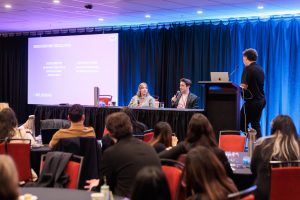
The AI on the Frontline: Reimagining the World of Retail event brought together more than 170 attendees at the iconic State Library Victoria showcasing the growing appetite for insight into how AI is reshaping the retail landscape.

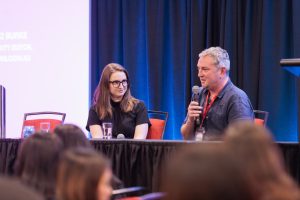
A powerhouse panel featuring Bill Burns Global CEO of Zebra Technologies, Sarah Hunter Managing Director of Officeworks and Genevieve Elliott, CIO of Bunnings explored how AI is driving operational efficiency and empowering frontline teams. From software integration to strategic automation, the illuminating discussion revealed how the right tools can free up staff for higher-value tasks.

We would thank AmCham for hosting such a future-focused discussion, we’re thrilled to have helped bring this event to life and excited to support conversations that spotlight innovation and the future of retail.