We are excited to announce that Primary Communication has been shortlisted in several categories for the prestigious CPRA Golden Target Awards, which will be held on October 30 at the ICC Sydney!
Congratulations to one of Primary’s partners, Elaine Banoub, who’s a finalist in the Professional of the Year category. Elaine leads on a number of key accounts and has been instrumental in establishing new processes and initiatives that have contributed positively to business growth and staff wellbeing but also to the sector as a whole.
Primary is also honoured to have been shortlisted for:
Hysata, integrated PR and GR program to help secure Australia’s Largest Climate Tech Series B Round (Campaign category: Corporate Reputation and Management)
Royal Life Saving NSW, ACT, TAS, advocacy to secure funding for the Project Harmony swimming education program for our most vulnerable communities (Campaign category: Public Affairs and Advocacy)
A huge congratulations to all the other finalists! We can’t wait to celebrate at the awards night.
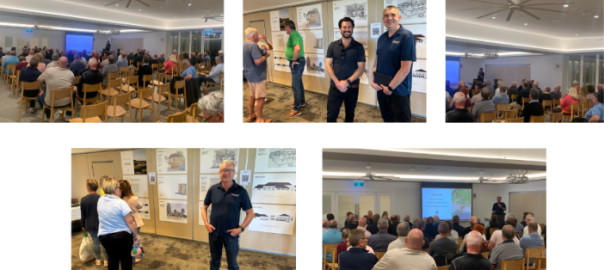
Primary Engage has been supporting Long Reef Golf Club undertake consultation with its members, visitors and the community about a proposed refurbishment of the club. This is a great example of best practice, engaging at the conceptual stage well before plans are crystalised and a planning process has begun.
Primary was there for all three face to face engagement sessions, worked closely with the Club on its communication plan and helped devise and analyse a survey to provide feedback on the views of club members, visitors and the community.
On Friday 30 August, rugby and sporting greats along with supporters and lovers of the game attended The Cauliflower Club’s Annual Fundraising Lunch for the Sargood Foundation.
This year, in addition to the ambitious fundraising target, the lunch farewelled the legendary Michael Hooper, one of the finest Wallabies of his generation and longest serving Test Captains.
The atmosphere was electric as 530 guests, including VIPs The Hon Anthony Albanese, former Governor General Sir Peter Cosgrove, current and former Wallabies, Olympians, politicians and media personalities filled the ballroom at The Fullerton Hotel Sydney.
Hosted by MC and Chair of the Cauliflower Club Peter FitzSimons, the luncheon featured engaging speaking sessions with Michael Hooper in conversation with former ABC Q&A, Lateline host, and multiple Walkley award-winning journalist, Tony Jones where Michael shared inspiration and insights into his career with the Wallabies.
It was a great honour to also hear from Sebastian van Veenendaal from Sargood on Collaroy, and Curtis Palmer, Paralympian and wheelchair rugby athlete, speak about the work of the Sargood Foundation and how the money raised impacts the lives of those with spinal cord injuries.
Primary worked closely with the Cauliflower Club board to deliver a successful luncheon, partnering with the Helping Hands Group to deliver silent and live auctions that helped exceed the fund-raising target. The day was a fitting tribute to Michael Hooper and a significant boost for a worthy cause, raising over $85,000.
The only poll that counts is an election and all that stuff, but none of the litmus tests for the Albanese Government or the Dutton Opposition are good news for either.
This week’s Newspoll showed both leaders had an approval rating of minus 13 and voters split 50-50 on a two-party preferred basis.
Newspoll says a hung Parliament would have resulted if an election had been held last weekend, with The Greens, Teals and independents holding the balance of power.
All talk in the months ahead will be about circuit breakers. History shows that the more desperate a government becomes in its search for one, the more it cocks up.
A prime example is this week’s attempt by Treasurer Jim Chalmers to blame enduring high inflation on the Reserve Bank.
A cut in interest rates could lift the Government’s stocks, but publicly pressuring the independent Board of the Reserve is not going to bring it about.
The more time a government appears to spend talking about non-mainstream issues – like an inclusion question in the Census, the timing of a Prime Ministerial wedding or divisions in its ranks about the Gaza conflict– the more disconnected it looks from mainstream issues.
Remember when Scott Morrison tried to rally his base on Sydney’s Northern Beaches with a conversation about transgender sport in the 2022 election? He was actually toast before that, and it hindered more than it helped.
Once elected, Anthony Albanese made a bonfire of his own political capital by not explaining his proposed Voice and hasn’t had any momentum since.
Politicians since Ronald Reagan have wallowed in parroting “it’s about the economy, stupid”, but the smart ones know that it’s really about the economic impact on people.
Absurd populism (like The Greens’ fantasy of a tax on company profits) won’t change things, but is anyone listening to major parties at this stage of the game?
Craig Regan, Senior Account Director, Primary Communication
Commencing 1 July 2024, the NSW Government extended the use of existing mobile phone detection cameras to ensure road users are wearing seatbelts correctly.
It has been compulsory to wear seatbelts in NSW since 1971, yet sadly, each year on average 29 lives are lost and 76 seriously injured from not wearing their seatbelts.
To support this new road safety initiative, Primary Create developed a series of education tools to help change the behaviour of road users.
Primary Create is continuing to work with the NSW Government’s Transport for NSW to develop a larger suite of educational films that will cover all types of road uses. These projects are currently in pre-production.
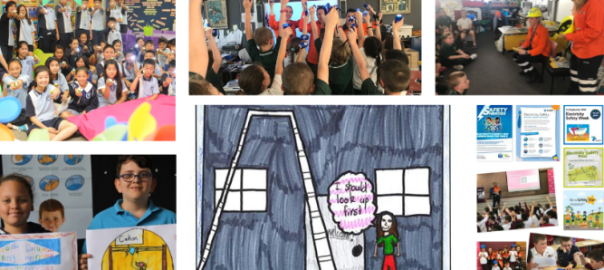
We’re thrilled to announce another successful Electricity Safety Week (ESW), which took place from 2-6 September.
Since its inception in 2001, ESW has been a cornerstone program for primary schools across New South Wales and Queensland, and this year we reached new heights with a record 3,675 schools participating—our most successful year to date.
At Primary, we’re proud to partner with Ausgrid, Endeavour Energy, Essential Energy (NSW), Energex, and Ergon Energy Network (QLD) to deliver this vital program.
From producing curriculum-aligned resource packs, including K-6 lesson books with STEM activities, prizes, posters, and stickers, to developing content, promoting the program, and registering schools, we manage every detail to ensure a seamless experience.
We also facilitate employee volunteer visits program, where industry experts from Endeavour Energy have the opportunity to visit schools in their network area during ESW, to educate students on the importance of electricity safety, in a fun and interactive.
Electricity Safety Week is offered free of charge, reflecting the commitment of Ausgrid, Endeavour Energy, Essential Energy and Energy QLD to building safer communities through education. As we continue to play a part in growing and evolving this initiative, we’re inspired by the overwhelming participation and enthusiasm from teachers and students. We can’t wait to build on this for ESW 2025!
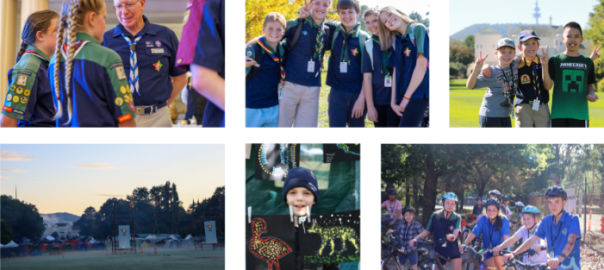
His Excellency General the Honourable David Hurley AC DSC (Retd) Governor-General of the Commonwealth of Australia welcomed Scouts to the grounds of Government House for the first time ever from Sunday 14 to Friday 19 April.
This historic occasion saw 1,400 Scouts from across Australia converge upon the grounds. The Scouts Australia Camp marked a monumental milestone as the first-ever instance of Government House opening its doors to the Scouts community, promising a week of unparalleled adventure, camaraderie, and personal growth.
Primary spearheaded an extensive media campaign in less than three days, championing Scouts as an opportunity for youth to engage in an adventurous, enriching, and inclusive program.
The outreach efforts led by Primary resulted in comprehensive coverage for Scouts Australia, spanning across television, radio, print, and online media nationally and across various states.
Particularly noteworthy were the comprehensive TV features on WIN News and Channel 7, which effectively showcased Scouts Australia as the exciting, challenging, and inclusive adventure that it is for young people, enhancing the visibility and appeal of the Scouts’ dynamic, curated experiences.
In 2023, Primary Engage began working with the Blue Sox Group to facilitate their community and stakeholder engagement on the proposed redevelopment of the Berrima Gaol.
This project represents a significant opportunity to revitalise a key heritage site paying respect to its past but undertaking an adaptive re-use of the historic gaol.
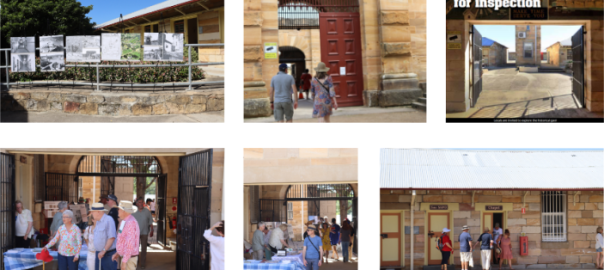
To kick off the process, Blue Sox participated in the Berrima Village Australia Day festival on 26 January 2024, with Primary Engage hosting an information stall where we connected with community members and visitors. The gaol was also opened to visitors for the first time in many years. The Gaol Open Day attracted approximately 5,000 visitors and provided a platform for Blue Sox to share its vision for the Berrima Gaol site and gather early feedback on the redevelopment concept.
The open dialogue with locals and stakeholders has been invaluable in shaping a project that honours the heritage of Berrima while meeting the needs of the community.
Our commitment to transparent and inclusive engagement continues as we work closely with the Blue Sox Group to ensure that the redevelopment reflects the aspirations of Berrima’s residents and the broader region.
Early engagement in the planning process is a crucial step that is often overlooked, leading to significant challenges down the line. Primary Engage has helped numerous organisations get off to the right start by establishing effective engagement practices from the outset. By prioritising early communication and collaboration with stakeholders, we lay strong foundations for successful and sustainable development projects.
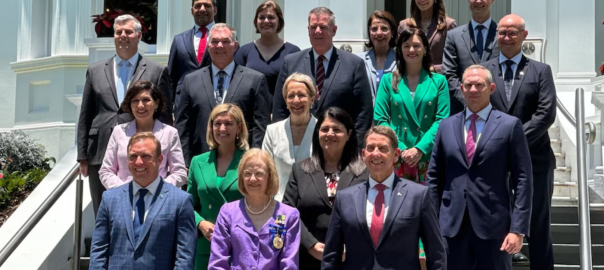
Former Deputy Premier Steven Miles was officially sworn in in as Queensland’s Premier with Treasurer Cameron Dick as his deputy. The Queensland Labor Government avoided a lengthy leadership ballot after Health Minister Shannon Fentiman withdrew from the race, conceding that her Left factional ally Miles had the numbers.
The new Premier has announced a significant Cabinet reshuffle, with five newcomers joining the frontbench, replacing three Ministers who have moved to the backbench.
Cameron Dick’s Right faction gained an additional Cabinet position in exchange for their support of Steven Miles.
The new leadership team faces an uphill battle to retain power at next year’s October state election, with Labor trailing the Coalition 52-48 in the polls.
To win back voters, the Queensland Government needs to address several key issues: the cost-of-living crisis, housing, crime and the increasing cost of the Brisbane Olympics.
Steven Miles and Cameron Dick will be Queensland’s premier and deputy premier.
The Incoming Premier:
Originally a member of the Right faction, Miles defected to the Left after failing to gain support for preselection in 2009. He unsuccessfully ran for the seat of Ryan in the 2010 Federal Election.
In 2014, Miles defeated Fiona McNamara for preselection in the seat of Mount Coot-tha’s. He went on to win the seat in the 2015 state election, where he was immediately elevated to the role of Minister for the Environment, Heritage Protection, National Parks, and the Great Barrier Reef.
Following the 2017 electoral redistribution, Miles was elected in the seat of Murrumba and named Minister for Health and Ambulance Services in the second Palaszczuk Ministry.
During the early COVID-19 pandemic, he was the first state minister to declare a public health emergency in January 2020, and earned a reputation as the Premier’s “attack dog” after he filmed himself ripping up a $30 million dollar invoice from the NSW Government for the cost of quarantining Queenslanders.
Miles became Deputy Premier in May 2020, following Jackie Trad’s resignation, and retained his health ministry role until October 2020. Afterwards, he was appointed Minister for State Development, Infrastructure, Local Government, and Planning in the third Palaszczuk Ministry.
In 2021, Miles again made headlines after he appeared to call then Prime Minister Scott Morrison an offensive term in a speech addressing a union rally. Miles claimed it was an accidental stutter. Scott Morrison accepted the explanation, telling Cairns radio 4CA at the time: “he has a habit of carrying on like a bit of an idiot”.
While Miles nervous demeanour in early press conferences earned him the nickname “Giggles” amongst the media, the new Premier has a serious task ahead of him.
When recently addressing the media late last year, incoming Premier Steven Miles acknowledged his “underdog” status, and signalled a new focus on cost-of-living, with a freeze on car registrations:
“What I intend to demonstrate to Queenslanders between now and then is just what kind of Premier I would be: absolutely focused on them, their safety, their cost of living, and the issues that are important to them.”
The New Queensland Government:
Prior to Christmas 2023, Premier Steven Miles announced five new ministers, and five assistant ministers would be brought into Cabinet, in the largest reshuffle in nine years of the Queensland Labor Government. Lance McCallum, Nikki Boyd, Bart Mellish, Michael Healy, and Charis Mullen will join the cabinet as first-time ministers:
“They are younger, they are energetic, they are ready to deliver a fresh approach for Queenslanders” – Premier of Queensland, the Hon Steven Miles
Housing Minister Meaghan Scanlon has gained three new responsibilities to tackle the housing crisis, becoming Housing, Planning, Local Government and Public Works Minister, with Miles’ former State Development, Infrastructure, Planning and Local Government portfolio which has been broken up to create the housing super-portfolio.
Relegated members Mark Bailey, Stirling Hinchliffe and Craig Crawford have lost the transport, tourism and child safety ministerial portfolios respectively.
Youth Justice Minister Di Farmer has added Education to her responsibilities, Police Minister Mark Ryan picked up the additional responsibility of Community Safety, and Mick De Brenni’s Energy Department has added climate to their title, reflecting the Federal Government’s department.
Previous Education Minister Grace Grace retained the Industrial Relations and Racing portfolios and also took on State Development. There is no dedicated Minister for the Olympic and Paralympic Games, however Grace Grace has assumed responsibility for the Games under her portfolio.
Queensland Ministry:
Minister Portfolio
Hon. Steven Miles MP
Premier
Hon. Cameron Dick MP
Deputy Premier, Treasurer and Minister for Trade and Investment
Hon. Grace Grace MP
Minister for State Development and Infrastructure, Minister for Industrial Relations and Minister for Racing
Hon. Shannon Fentiman MP
Minister for Health, Mental Health and Ambulance Services and Minister for Women
Hon. Yvette D’ath MP
Attorney-General and Minister for Justice and Minister for the Prevention of Domestic and Family Violence
Hon. Michael De Brenni MP
Minister for Clean Economy and Jobs
Hon. Meaghan Scanlon MP
Minister for Housing, Local Government and Planning and Minister for Public Works
Hon. Mark Ryan MP
Minister for Police and Community Safety
Hon. Leeanne Enoch MP
Minister for Treaty, Minister for Aboriginal and Torres Strait Islander Partnerships, Minister for Communities and Minister for the Arts
Hon. Dianne Farmer MP
Minister for Education and Minister for Youth Justice
Hon. Mark Furner MP
Minister for Agricultural Industry Development and Fisheries and Minister for Rural Communities
Hon. Glenn Butcher MP
Minister for Regional Development and Manufacturing and Minister for Water
Hon. Scott Stewart MP
Minister for Resources and Critical Minerals
Hon. Leanne Linard MP
Minister for the Environment and the Great Barrier Reef and Minister for Science and Innovation
Hon. Nikki Boyd MP
Minister for Fire and Disaster Recovery and Minister for Corrective Services
Hon. Bart Mellish MP
Minister for Transport and Main Roads and Minister for Digital Services
Hon. Lance McCallumMP
Minister for Employment and Small Business and Minister for Training and Skills Development
Hon. Charis MullenMP
Minister for Child Safety, Minister for Seniors and Disability Services and Minister for Multicultural Affairs
Hon. Michael Healy MP
Minister for Tourism and Sport
Assistant Minister Portfolio
Bruce Saunders
Assistant Minister for Train Manufacturing, Regional Development, and Jobs.
Julieanne Gilbert
Assistant Minister for State Development, Infrastructure, Industrial Relations and Racing
Brittany Lauga
Assistant Minister for Health and Regional Health Infrastructure
Ali King
Assistant Minister for Housing, Local Government, Planning and Public Works
Jennifer Howard
Assistant Minister for Treasury, Trade and Investment
Shane King
Assistant Minister for Clean Energy Jobs
Corrine McMillan
Assistant Minister for Education and Youth Justice
James Sullivan
Assistant Minister for Justice and Veterans Affairs
Last summer, 83% of drownings were men, 17% involved alcohol, and 16% occurred during holiday weekends. A major spike also occurred in older adults, with drowning deaths among people over 65 representing a 43 per cent increase on the 20-year average. The #AreYouSummerReady campaign targeted organisations who would become water-safety champions for these at-risk groups.
Primary’s creative, government and communication teams worked together to develop accessible checklists and messages that would help community leaders promote simple tips to be better prepared – from learning CPR, preparing the home and pool, checking on health limitations and learning to swim. We approached 109 local councils in NSW and Tasmania, and 363 organisations – including youth, health, community and sporting clubs in key drowning hotspots, aiming to create local water-safety champions.
Hundreds of organisations representing these key audiences and regions have joined the campaign as summer approached, including Multicultural NSW, SBS Mandarin, Water NSW, Kidsafe NSW, ACT Children and Young People Death Review Committee, Western Sydney Youth Solutions, and NRL team the Sydney Roosters.
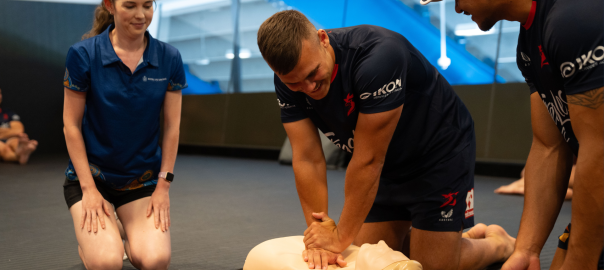
The pre-summer campaign culminated in the Sydney Roosters offering a group of players and officials the chance to earn a Royal Life Saving CPR accreditation the week before the summer holidays commenced. It was a great way for the iconic team to take a lead on an important community initiative, and kick-off the summer holidays. The Summer-Ready Campaign paves the way for collaborations across all regions and audiences to take a lead on supporting drowning prevention. We look forward to seeing these collaborations continue to grow. And remember, to stay water safe this summer.