Primary has produced these sitting day calendars for you to download and print.
Download here: NSW sitting day calendar
Download here: Federal sitting day calendar

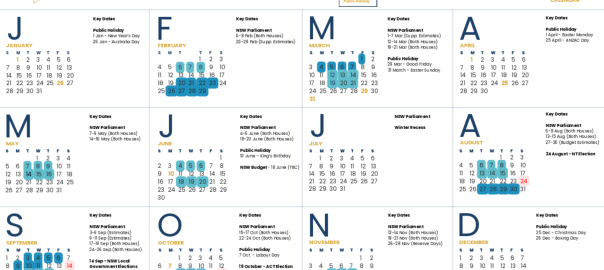
Primary has produced these sitting day calendars for you to download and print.
Download here: NSW sitting day calendar
Download here: Federal sitting day calendar
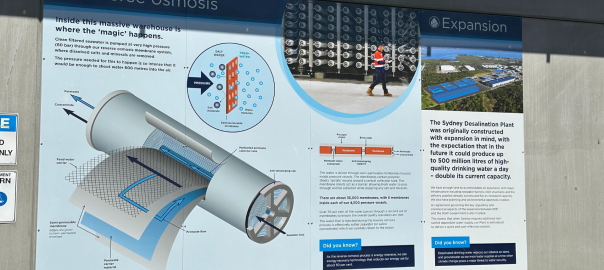
As Sydney’s only major non-rainfall dependent source of drinking water, it was important that SDP showcase the fantastic work they do in bolstering Sydney’s drinking water supply. But how do they do it?
Primary Create worked with SDP to design, print and install a series of education boards to be dotted around the facility. Each board features one of the steps involved in the desalination process as well as a few fun facts. (For example, did you know their drinking water storage tank can hold enough water to fill 16 Olympic-size pools? Or that one third of the site is a dedicated conservation zone? We didn’t either!)
Full of engaging images, timelines, and interesting facts, people touring the facility only have to look up to find everything they need to know about the desalination process including:
· Reverse osmosis
· Filtration
· Booster pumps; and
· Post treatment management
There’s even an education board that highlights some of the fantastic work SDP is doing around environmental conservation.
To support these boards, the Create team also redesigned the SDP website with a clear focus on a site that not only offers a great user experience but highlights the important work that SDP does.
Thank you, SDP, for entrusting us with this this work. We look forward to continuing our longstanding relationship!
As well as updating the economic and fiscal outlook, the MYEFO takes account of all decisions made since the release of the Budget which affect payments and receipts.
This MYEFO is all about cutting a range of infrastructure projects and limiting spending while riding a rise in tax receipts while attempting to do nothing that could fuel inflation.
High commodity prices, low unemployment and surging non-mining corporate profits are behind the better budget position.
MYEFO reveals shows that tax receipts over the forward estimates are $64.4 billion higher than forecast in the May Budget.
This is mostly due to personal income taxes being $30 billion higher than forecast ($9b higher for this financial year) and company tax receipts being $34.5b more over the four years ($9.2b higher this financial year.)
The Government has found $9.8b in savings since May, the bulk of which from pushing $7.4 billion in infrastructure spending beyond the forward estimates. Some 50 projects were scrapped as part of the Government’s Infrastructure Review.
Australia’s Federal Budget is on track for a $1.1bn deficit this financial year, down from a predicted $14b.
We’ve highlighted three areas that the Albanese Government have taken specific measures for:
Taxation
MYEFO predicts the Government will raise $500m from stopping interest charged by the Australian Taxation Office to be claimed as a tax deduction. Taxpayers incur interest when they don’t pay their tax debts on time. Removing these deductions will encourage taxpayers to pay on time and begins from 1 July 2025.
Infrastructure
MYEFO allocates a further $4.2b for road safety infrastructure, including a graduated increase in funding for the Roads to Recovery Program to $1b a year.
The Government will invest in important water infrastructure projects by allocating a further $180.3m through the National Water Grid Fund.
Renewable Energy
The Government has committed more than $3b in new spending. This includes $2.5b to support the Critical Minerals Strategy 2023–2030.
This comprises $2b for the Critical Minerals Facility and $500 million for related projects in Northern Australia, via the Northern Australia Infrastructure Facility (NAIF).
A Battery Supply Chain and Research Working Group will be formed to work with the US Government on battery supply chains, battery manufacturing capabilities and battery technology research and development at a cost at of $5.4m.
Another $359m over four years has been allocated to unlock the benefits of cleaner, cheaper and more reliable energy, as a critical enabler of future clean industries and broader decarbonisation.
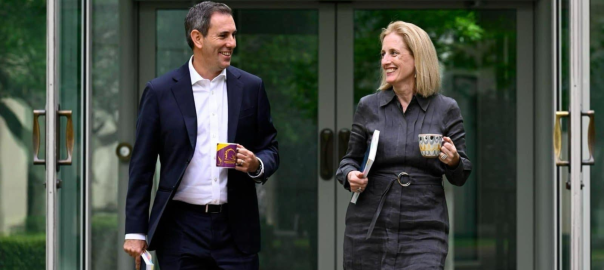
Image source: Jim Chalmers MP Facebook

Primary Comms Group is proud to announce the publication of our inaugural Reconciliation Action Plan (RAP), which formalises our commitment to greater cultural understanding and respect for First Nations communities.
Through a targeted strategy endorsed by Reconciliation Australia, our RAP serves as a guide to assist our staff in building strong and positive relationships with Aboriginal and Torres Strait Islander peoples, fostering connectedness and cultural competence with our nation’s traditional owners.
The plan encompasses our three brands, Primary Communication, Primary Create and Primary Engage, and demonstrates our collaborative approach from members across each branch working towards Primary’s RAP goals.
Our broader goals as part of the RAP include:
· Plan and support campaigns promoting change in First Nations communities
· Guide our operations to work safely, respectfully and effectively with First Nations peoples
· Support our organisation’s journey to becoming culturally safe and competent
· Ensure our work is informed by First Nations by fostering positive relationships with their leaders and organisations
The RAP follows the development of our Modern Slavery Statement, detailing our pledge to assess and monitor any risks of modern slavery within our workplace, our business operations and our suppliers. As with the RAP, it is another demonstration of our commitment to pro-action and accountability.
Read our RAP here: Primary Communication Reconciliation Action Plan 2023 – 2024
Deputy Premier Jacinta Allan has been elected unopposed to succeed Premier Daniel Andrews following the shock resignation after more than eight years in power.
Premier Allan announced the full ministry which has several changes and announced her goal was to address a housing shortage by delivering on the government’s target of delivering 800,000 new homes over the next decade.
The changes are relatively modest and the view is that the new Premier will focus on bedding down the challenges her predecessor left behind without radically altering the machinery of government.
Ben Carroll was elected Deputy Premier after serving as an MP since 2012. He has previously held the portfolios of Public Transport, Manufacturing Sovereignty, Employment, and Industry and Innovation, and will now hold Education and Minister for Medical Research.
Carroll is from Labor’s Right faction and appears to be a winner by assuming the Deputy Premiership. It is understood that much of the reform in the education sector that he has inherited has been completed, however, so he may have time on his hands.
Tim Pallas remains Treasurer and Minister for Industrial Relations with the portfolio of Trade and Investment (renamed Economic Growth) and will maintain his focus on securing investment opportunities for the state.
One of the big winners, Assistant Treasurer Danny Pearson, adds the new Premier’s former portfolios of transport infrastructure and the suburban rail loop to his responsibilities.
The Press Gallery claimed this was a surprise, given Pearson’s fall-out from not declaring a possible conflict of interest from owning Commonwealth Bank shares when he announced the bank had won a multimillion-dollar contract.
Attorney General, Minister for Emergency Services and Leader of the Government in the Legislative Council, Jaclyn Symes, retains her portfolios. She will ensure that regional representation remains within the leadership team as she lives in Mildura and represents towns like Daylesford, Bendigo and Wangaratta.
The Allan government has also opted for stability in its energy transition program with Lily D’Ambrosio remaining Minister for Climate Action, Minister for Energy and Resources and Minister for the State Energy Commission. The $1 billion re-establishment of State Energy Commission was one of the key election policies from the government at last year’s election and is focused on investing in renewable energy and storage projects.
Also retaining their portfolios are Police Minister Anthony Carbines and Corrections Minister Enver Erdogan.
Below you can see the full list of Ministers and Parliamentary Secretaries:
First Allan Ministry
Parliamentary Secretaries

Chris Minns’ first budget as Premier, was very much framed with the goal of paying back debt, putting money back into essential public services like health and education and investing heavily in housing and energy.
Treasurer Daniel Mookhey in pre-budget interviews spoke of his desire to make ‘tough decisions’ to get the budget back under control following recent spending on emergencies including black summer bushfires, floods and COVID-19 which ended a long run of budget surpluses.
As with most budgets, there were lots of pre-budget announcements, hinting of harsh cuts on the previous Government’s projects. Treasurer Mookhey has unashamedly redirected spending toward Labor priorities including higher wages for the public service following a decade of Coalition wage cap policy.
The government also sees the increasing impact the housing crisis is having on the community, business and the wider economy and has made spending on housing the centrepiece of this budget. More than $2.2 billion will be spent to ensure that social, affordable, and private housing stock can grow to meet the population and economic demands of NSW.
The government is determined that housing supply does not hamper economic growth and wants NSW to continue to maintain the position it has as Australia’s largest state economy. Premier Minns has made public comments that local councils cannot stand in the way of more housing so NSW can reach the commitment made in the National Housing Accord of 75,000 homes a year for five years.
Debt in NSW is now projected to reach $173.4 billion in June 2026 down from a projected $188 billion when Labor took office.
Rising global interest rates have only added to budgetary pressures with interest payments expected to climb from $2.5 billion in 2020-21 to $7 billion by 2025-26.
The government expects that the budget will return to a surplus of $844 million by 2024-2025 assuming the “no worse off guarantee” payments form the GST floor will remain in place.
Economic Overview
The economic landscape in New South Wales is a mixed bag, showing signs of recovery post-COVID-19 but also revealing stark disparities and challenges.
While economic activity has broadly rebounded, the benefits are not evenly distributed across the population.
Income per person is stagnating, barely keeping pace with inflation, which puts significant pressure on family budgets.
The average household’s spending is on a decline, affecting lower-income families and vulnerable populations the most.
Inflation, although eased to 6.6% in the June quarter, remains high, with the cost of essential goods like food and non-alcoholic beverages rising by 7.8% and household energy costs skyrocketing by 24.3%.
Housing remains a critical issue, with dwelling construction lagging behind federal and state housing targets and rents and home prices escalating at alarming rates. The Reserve Bank of Australia’s decision to raise interest rates 12 times since May 2022 has further exacerbated the cost-of-living crisis.
Public service salary caps have led to low wage growth, contributing to essential service shortages. Despite these challenges, the Government’s comprehensive expenditure review has redirected $13 billion of spend, aiming for a modest surplus by 2024-25 and the largest set of gross debt reduction measures in the State’s history.
The focus is now on increasing housing supply and improving infrastructure, including schools, hospitals, and public transport, without resorting to privatisation.
Key Budget Highlights
Public Sector:
Health:
Education:
Housing and Planning:
Energy:
Transport & Infrastructure:

When the Generals talk
You might have been confused last week when breakfast radio reported Australia’s top soldier, General Angus Houston, was warning that the greatest existential threat facing the country is “truth decay”.
It was early morning and images of dentists abandoning their BMWs and Mercs and racing to the battlements rushed through my own brain fog as I walked the dog through Sydney’s smoke haze.
Then the takeaway coffee hit and I realised it’s only just spring and most dentists are still on holiday in Europe.
While my aversion to drills remains firmly intact, General Houston was talking about Artificial Intelligence and how it’s bringing a new level of fakery to the imagery and messages that we consume through digital channels.
The key quote for those not glued to the radio news was: “This tech future may accelerate truth decay, greatly challenging the quality of what we call public ‘common sense’, seriously damaging public confidence in elected officials and undermining the trust that binds us.”
Without getting too post-modernist, one person’s truth has always been someone else’s virtual reality. Bending the truth didn’t start with AI. The technology has been with us for a few years. It is getting better.
The General was describing a new, more sophisticated way of spreading misinformation that’s driven by nation states and is more potent because it has the ability to reach large numbers of people in a very short space of time.
Closer to home, dealing with an online booking agency for a change to a ticket for a pending overseas trip had me asking if I was talking with a human or a bot. (The answer was a robotic version of the former but it was hard to tell.)
Our regulators have a lot of catching up to do regarding what rules and regulations they put in place to moderate the use of AI. The Ethics Principles for AI that the New South Wales Government has put in place by its departments is a great start.
Image Credit: RAAF
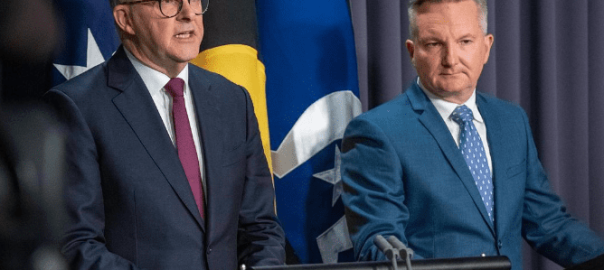
Energy was a key platform issue of the 2022 Federal Election as Australians took to the polls to choose their nation’s leaders. Based on an election platform of ‘Powering Australia’, the Australian Labor Party had a strong commitment to the clean energy transition and instituting real change to combat the effects of climate change.
As the Albanese Government approaches one year in power, we looked into some of its key election commitments in energy, and whether they’re delivering on these promises.
Safeguard Mechanism
A topic of contention between the parties, the Government’s proposed reforms to the existing safeguard mechanisms to “reduce emissions limits… predictably and gradually on a trajectory consistent with achieving net zero by 2050” will now become law.
After months of debate, Labor has finally secured parliamentary support for these reforms, with the bill passing both Houses last week. The Greens were unsuccessful battle to include a mandatory preclusion to opening new gas and coal projects on domestic soil.
More than 200 of Australia’s largest polluters will be subject to the changes, which will require a reduction in emissions of 4.9% every year in order to help achieve the national target of a 43% emissions reduction by 2030.
The Safeguard Mechanism reforms will be applied from 1 July 2023.
National Reconstruction Fund
The National Reconstruction Fund, deemed Labor’s preliminary plan to ‘rebuild Australia’s industrial base’ was officially enacted into legislation after a series of amendments were made by the Greens and members of the cross bench.
Among the successful amendments includes the mandatory preclusion of funding coal and gas projects and establishing a written policy on the impact of investments of the Corporation on First Nations Australians.
The fund will provide $15billion worth of loans, guarantees and equity to support projects the government sees as building Australia’s “national sovereign capability, broadening and diversifying Australia’s economy.”
Under the fund, renewables and low emissions technologies have been categorised as one of the priority areas set to be diversified and transformed in a bid to take advantage of opportunities in a net zero economy.
The Government have identified up to $3 billion to be spent on renewables and low emissions technologies, supporting the funding of a range of projects from wind turbines to hydrogen electrolysers. Public consultation into what should inform funding priorities was sought after earlier this year.
National Electric Vehicle Strategy
In Australia, transport makes up 19% of national emissions. Road transport is close to 85% of those emissions.
Until recently, there was no uniform approach to the uptake of electric vehicles (EVs) in Australia, but several state-based policies with varying ambition.
In September 2022, the Government released a consultation document to seek views from the public to form the basis of the National Electric Vehicle Strategy. Over 500 submissions were received by individuals and organisations to form the goals, objectives and actions which would provide the make-up of the strategy.
On 19 April 2023, the National Electric Vehicle Strategy was released, providing an overview of key objectives relating to the accessibility of EVs and instituting the necessary infrastructure to accommodate their expected increased demand.
The strategy also outlines the need to establish Fuel Efficiency Standards to combat the excessive amount of carbon dioxide emitted from light vehicles currently in circulation in Australia and target their high fuel costs. The implementation of these standards will incentivise vehicle manufacturers to offer fuel efficient vehicles on Australian shores and increase our EV accessibility. Currently, Australia is one of few developed countries, including Russia, without a designated fuel efficiency standard in place.
The Coalition has not made any official comment on whether it will support the new strategy, with Shadow Minister for Climate Change and Energy Ted O’Brien stating it needed time to review the document.
“The Coalition will take the time to study the government’s EV Strategy. As always, we will be constructive where we can and critical where we must.”
The Greens have taken a more direct approach, with leader Adam Bandt likening it to “a roadmap but with no clear destination.”
Public consultation on what will form the standards is now being sought, with opinions from climate groups, the automotive industry, individuals and businesses welcome. The consultation period will close on 31 May 2023.
Photo Credit: Prime Minister Anthony Albanese
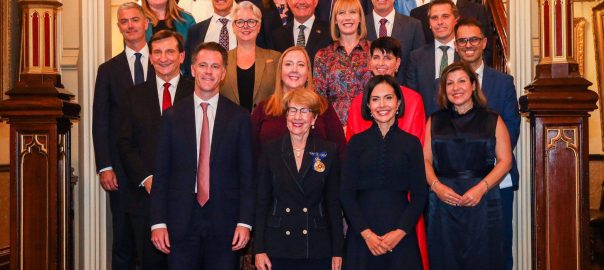
It was barely three hours into the count on the 25 March before pollsters predicted Labor were on track to win the NSW State Election with a decisive majority.
In the following days, it became apparent that the swings towards Labor on election night were the result of a last-minute surge in popularity, occurring too late in the campaign to be reflected in the pre-poll and postal votes.
Over the next ten days, Labor’s lead dwindled, as did their hopes for a majority government.
Nonetheless as the party with most representatives in the parliament, Labor’s Chris Minns was sworn in as the State’s 47th Premier.
With three crossbenchers guaranteeing supply and confidence, Premier Minns has succeeded Dominic Perrottet after three terms (12 years) of Liberal-National Coalition rule.
Needing 47 seats to claim a majority, Labor finished on 45 with the Coalition on 36, with three seats retained by Greens and nine going to independents.
The Greens have held their three incumbent seats of Balmain, Ballina, and Newtown, while former Shooters, Fishers, and Farmers MPs Phil Donato (Orange), Roy Butler (Barwon) and Helen Dalton (Murray) retained their Lower House seats as independents.
Independent crossbenchers Joe McGirr (Wagga Wagga), Alex Greenwich (Sydney) and Greg Piper (Lake Macquarie) also retained their seats.
Liberal turned independent, Gareth Ward, also won his seat of Kiama.
Predictions of a strong Teal independent surge reminiscent of the Federal Election did not eventuate.
Climate 200-backed candidate in Wollondilly, Judy Hannan, snatched the south-west Sydney seat from Liberal Nathaniel Smith, and Independent former Northern Beaches Council Mayor Michael Regan has taken Wakehurst from the Liberals.
Minns’ cabinet, the 100th Ministry in NSW, was sworn in, and for the first time in the state’s history, women will make up fifty percent of the Ministry.
The Liberals will begin their rebuild with new leader Mark Speakman after former Premier Dominic Perrottet resigned as the Liberal’s leader after conceding. The former attorney-general won the top spot 22 to 13 over Anthony Roberts.
Photo Credit: NSW Labor
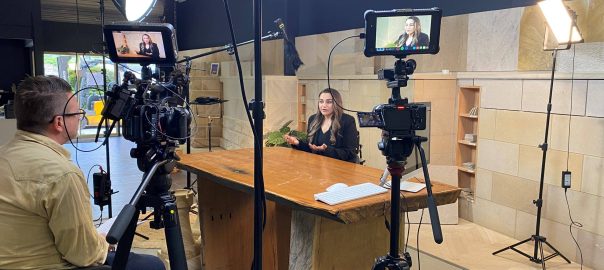
Celebrating 100 years is no small feat and a milestone only a handful of Australian businesses can claim. Naturally, our Primary Create team were thrilled to help Gosford Quarries mark this major occasion. Tasked with the creation of a celebratory feature film and coffee table book, the team immersed themselves in all things sandstone and how this successful business carved out their slice of the Australian market.
Being 100 years young, there was a lot to uncover. Over the years, Gosford Quarries has shaped the Sydney landscape. Through a series of interviews with key staff, architects and builders, our team documented the restoration of the QVB, the Sydney Town Hall as well as the spires of St Mary’s Cathedral.
While Gosford Quarries has undoubtedly brought the Sydney CBD to life, they have also been instrumental in many civil and historic buildings around Australia, including the Parliament of Victoria and The Australian War Memorial in Canberra. Our team was able to capture these remarkable stories through beautiful imagery and film.
A key theme in Gosford Quarries’ success has been their investment in technology that has resulted not only in the ability to process stone in smarter and more efficient ways, but to also utilise stone that would have been previously discarded.
200 George Street is one such case study, where new processes and technologies allowed the team to extract stone (that would have previously been unusable) from a building site, to then be processed as cladding and artwork within the newly constructed building. This is a favourite project for Gosford Quarries Director Sid Sarkis: “200 George Street is my favourite project because we were involved in the extraction of the stone from the site to the final building and creating the wonderful mural. I feel proud to have been involved in such a wonderful project.”
Congratulations Gosford Quarries on reaching 100 years and thank you for entrusting our team to capture this special milestone, which will be celebrated at a special launch this year!