Category Archives: Uncategorized

Braving the cold

Braving the cold for a Bondi icon

Lockhart-Krause Architects was commissioned to design alterations and additions to upgrade the club’s connection to community, supporting areas such as disabled access, children, nippers and family friendly areas, education space and address inequality of facilities for female members.

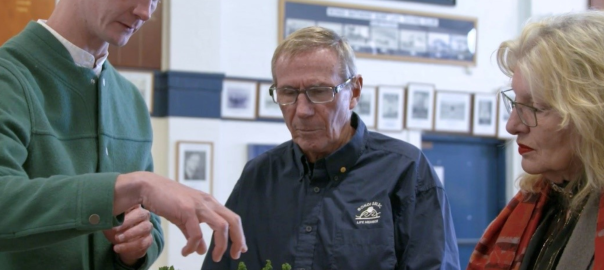
To help document and celebrate the milestone, we had a number of Council, Community and Project representatives willing to share their time to speak about the project and what it meant to the community and the many visitors who flock to the beach year-round.

From Paula Massselos, Mayor of Waverley to Brent Jackson, President of the surf club and Michael Ingrey, representative of the La Perouse Aboriginal Council, everyone spoke passionately about the project and the impact this upgraded facility will have from young to old.

Create is proud to work with Lockhart-Krause Architects to document and celebrate this milestone and looks forward to being part of the project during construction and completion in the near future.

Take a look at the video below and stay tuned for the journey ahead.

By Lauren Lawson

Lauren is Senior Account Manager with Primary Create, working with local, national and international clients, products and campaigns across disciplines and sectors.

Federal Government

Australia’s new Federal Government

A uniform swing of 3.7% saw Labor win a one-seat majority with 77 seats in the House of Representatives, the Coalition 58 seats, and the crossbenches 16 seats.

Of the 151 seats, 58 (37%) are held by women. However, in the Senate, women hold 43 (57%) of the 76 Seats.

Labor was indeed rewarded following a positive and disciplined, albeit “small target” campaign.

So, what’s next?

One of Labor’s biggest challenges now is maintaining that discipline as it navigates the volatile economic circumstances of increasing inflation and higher interest rates.

The government also has to present a coherent energy policy on the back of east-coast energy disruptions and the commitment to reduce emissions without being outflanked by the Greens who want to stretch them further than their election commitments.

The Coalition – on the other hand is left to lick its wounds and work out how to win back the voters they lost.

As is the case with any loss, vested interests are arguing about the future direction of the party.

Some argue that a move further to the Right will provide a clear conservative contrast to a progressive Labor government, while others maintain it was the conservative approach that alienated voters therefore, a move to centre is a better approach.

A challenge for the moderates is who to best lead the party in such a direction – following the decimation of their ranks by the Teal independents.

Conservative leaning Opposition leader, Peter Dutton has indicated that rather than trying to win back the predominately higher socio-economic coastal seats now held by the Teals, the Opposition should be targeting the traditional Labor-leaning outer suburban metropolitan seats,
with the promise of rewarding aspiration, reflecting a tactic that worked well for former Liberal Prime Minister John Howard.

While all of this is going on, it’s been interesting watching Anthony Albanese shift gears into governing in a measured and optimistic manner, which – if maintained -will make his team a formidable force to be reckoned with come the next election.

By Duncan Bremner

Duncan is Primary’s Senior Counsel, public affairs, with extensive and trusted networks in business politics, government, and media

Why Mental Health is a Primary matter

Why Mental Health is a Primary matter

During the COVID-19 lockdown across Sydney in 2021, Primary began the #WeArePrimary program – a highly-successful internal culture initiative which was created from valuable insights provided by staff.

The question which needed answering was, how do we best keep the team connected despite not existing in a face-to-face working environment?

One of the key focus areas of the #WeArePrimary program has been the promotion of better mental health.

To that end, the team recently attended the Better Mental Health Workshop hosted by Candice Lewis from Aspect Group.

“Everyone goes through stress and we should normalise speaking about this and the physical and emotional impacts it has on us,” said Renee de la Motte, Senior Account Manager.

“Every time we do a workshop like this, we create a safer and easier environment for people to discuss any issues they are experiencing.”

Taking a proactive approach to mental health, the team worked on evidence-based strategies and tools to best cope with high stress and pressure, improve mental resilience, and support their own and their co-workers’ mental wellbeing.

“The workshop highlighted many things, and the most prevalent was that I don’t really understand Mental Health and the struggles people with lived experiences go through like I thought I did,” added Bernadette Kazzi, Partner – Operations & Finance Manager.

“I also learnt how to manage tricky conversations with people who reach out with their problems.”

Senior Account Manager Danielle Cuthbert shares how she practically manages priorities for the day.

She suggests categorising your ‘to-do list’ as below:

  • My one thing (that I must get done today)
  • Should
  • Could

“It helps prioritise tasks and it is based on the concept that if you focus your energy on one key thing then there is generally a ripple effect,” said Danielle.

“It is from this book: ProduKtive Home – The ONE Thing (the1thing.com).”

Recent recruit Johanna Rigg-Smith particularly enjoyed the relatable and practical concepts of the workshop.

“I could see myself or people I know in most of the slides, but it was so great to have it laid out like that,” added Johanna.

“It really showed there was something practical you can do for any of the examples provided.

“Sleep, sunlight and exercise was an easy one. I’m loving my morning cortisol walk!”

Primary would like to say a big thank you to Candice for an eye-opening and informative workshop.

Federal Election

The Federal Election is done, so what happens next?

The Australian Public Service prepares sets of briefs for the parties most likely to form government. Work on the Red Book (Labor) and the Blue Book (Coalition) began before the election was even called.

Each outlines key issues for a new Government, what commitments were made in the campaign and how they can be delivered.

Incoming Prime Minister Anthony Albanese received his first transitional download from senior bureaucrats before the election, and a further briefing on Sunday.

He was sworn in today, along with four of his most senior ministers – Richard Marles (Defence and Deputy PM), Penny Wong (Foreign Minister), Jim Chalmers (Treasurer) and Katy Gallagher (Attorney-General).

Putting an interim cabinet in place enabled the PM and Minister Wong to fly to the Quad meeting in Tokyo and has been common practice since Gough Whitlam’s “It’s Time” election of 1972.

While the PM is away, you can expect the Labor Party factions to negotiate the distribution of portfolios, with the ALP Caucus due to meet and confirm all jobs on 30th May.

Ministers will be sworn in immediately after and briefed by their department heads about any issues they need to know about or appointments they need to make.

Life doesn’t stand still for the losers. The Ministerial Wing of Parliament House is buzzing to the sounds of personal documents being shredded, with official Cabinet records and departmental assets being handed over to the bureaucracy.

Thus is the nature of transition of power in our well-functioning democracy.

Craig Regan, Senior Account Director

Great political minds converge

Great political minds converge on Pyrmont

Former Federal Liberal Party Director, Brian Loughnane, and Labor Party consultant and former Prime Ministerial confidante, Bruce Hawker, gave the assembled crowd some telling insights into the campaign, which is moving through its second-last week.

The session was conducted under Chatham House rules so we won’t reveal anyone’s precise view about the likely verdict.

It’s fair to say, however, that the informed consensus in the room was that Labor has the less difficult path to victory.

Both speakers had a chance to deliver their overview before joining host Sally Loane in a Q and A session.

Brian said we will see plenty of surprises and seat swaps between the major parties with the preferences of independents likely to be crucial in electorates where the incumbent has a low primary vote.

Bruce reflected that the shift away from major parties is a worldwide occurrence, and in some ways, the rise of the so-called Teal candidates is a mirror image of Donald Trump’s activation of his own “deplorables”.

The night provided a fascinating download from both guests and was another feather in the cap of Business Sydney’s Paul Nicolaou, who is surely the city’s best-connected business networker. Primary Comms Group was delighted to be the sponsor.

primary Comms Group - Checklist

May Day hint at a list of Greens demands

“With a minority Parliament a likely outcome and the Greens set for balance of power in the Senate in their own right, Greens Leader Adam Bandt has announced he will publicly release a list of key balance of power demands prior to polling day,” the release said.

The Greens log of claims will be heavily scrutinised by both major parties as well as a Canberra bureaucracy that’s already compiling books of policy “must dos” for whoever occupies the Treasury benches after May 21.

Little change is expected in make-up of the Senate where half of the seats are up for grabs. The Greens won’t be picking up a swag of House of Reps seats so their role in the Senate will be important.

The latest Newspoll shows support for The Greens across the board remains steady at 11 percent, with the major parties still struggling to crack 40 percent in primary votes. That makes a minority Labor Government with Green support the most likely outcome.

Newspoll admittedly missed the mark in the 2019 election, but after some methodological tinkering under the bonnet, it picked the outcomes of state polls in Western Australia and South Australia.

Craig Regan, Senior Account Director

Facebook Logo

Josh in hot seat as UQ reveals Facebook ad spend

Frydenberg holds the seat of Kooyong, a traditional Liberal stronghold that straddles well-off Melbourne suburbs like Hawthorn, Kew and Balwyn, and holds it by a 6.4 percent margin.

The widely declared Prime Ministerial aspirant suffered a 7.1 percent swing at the 2019 poll and now faces a challenge from so-called “teal independent” Monique Ryan, a paediatric neurologist and former member of the Labor Party.

Ryan is supported by a community war chest, a wad of cash from climate activist Simon Holmes à Court, and changing demographics as younger, progressive voters moving into the seat.

University of Queensland has been tracking Facebook advertising spend by all parties since January 1 and as at breakfast time today, the Libs had already dropped $103,500 to sandbag Kooyong. Ryan’s spend is behind on $83,000 but expect that to change now we have moved into Week Three of the campaign.

Only the similarly contested Liberal seat of Wentworth in Sydney comes close. The campaigns of sitting MP Dave Sharma (LIB) and teal independent Allegra Spender have racked up a combined outlay of $82,000 on Facebook.

Spender is outspending Sharma online by about 50 percent.

Sharma sits on a 9.8 percent margin but his seat has long been vulnerable to a high profile independent – as demonstrated by Dr Kerryn Phelps holding it for seven months.

The mail is that the assault on these seats hasn’t yet cranked up in earnest with the trade union movement still to bring its weight to bear. Given that we’re poised for a record 40 percent of eligible voters casting pre-poll or postal votes, the online spending should peak in Kooyong and Wentworth before Polling Day.

Craig Regan, Senior Account Director

Primary Comms Group News

It might be alright on the night but the value of the Debates is in the re-telling

Their value lies not in the relatively small audience watching but in the bite-sized grabs and pictures that are being incessantly transmitted via mainstream and social media channels today.

A poor performance in one of the debates need not be fatal but it does go to the confidence of campaign teams – just like a good Question Time showing.

Labor Leader Anthony Albanese did lose some bark in an exchange about boat turn-backs and that grab will figure in post-event coverage.

It was the only flashpoint in a forum in which he and Scott Morrison spent a lot of time being civil to each other.

The relevance of the debates in the broad campaign context shouldn’t be overplayed.

Both leaders are meticulously prepared and they never result in a knock-out blow. Last night was no exception with points even.

John Howard looked uneasy when he took on Paul Keating in the first debate in 1996, but delivered a workshopped line about Australians wanting to be “comfortable and relaxed” in the final one that resonated with voters.

Today’s voters are tired of gotcha moments and politicking for politics’ sake – which is why the first Newspoll of the campaign showed a slide in both major parties’ primary vote.

It was no surprise that the studio audience verdict mirrored that.

Craig Regan, Senior Account Director

Campaign turns on a dime but expect more gaffes

Campaign turns on a dime but expect more gaffes

Political campaigns are carefully orchestrated roadshows with a theme for the day and a set piece media conference, complete with pictures to reinforce the message.

Radio and nightly news bulletins are still centrepieces. Social media serves to amplify events.

Anthony Albanese’s Tasmanian media conference on Day 1 of the Federal election campaign was supposed to be about funding for better services to help kids with hearing loss.

Instead it became all about his own memory loss, and the next day he was still putting out fires.

The Labor Leader’s gaffe goes to the Coalition positioning him as inexperienced and not qualified to manage the economy.

The only thing certain is that the first major stumble by a leader won’t be the last.

Better to trip up on Day 1 than Day 39.

There’s plenty of time for Labor to recover momentum and although the interruption of the looming Easter break won’t help, most of the voting public remains disengaged.

Albanese opened his media conference saying he wasn’t Scott Morrison and would take any and all questions.

It took 23 of them to stop him in his tracks.

His media minders will have taken note and have made the case for a more controlled approach.


Craig Regan, Senior Account Director

Visual storytelling videos

Visual storytelling videos

Here are our top three tips for creating relatable content for your market:

  1. Feature people – real everyday people that best represent the community you’re targeting
  2. Provide a personal perspective – stories and opinions are more powerful unscripted and told in first person
  3. Humanise it – don’t be afraid to voice an opinion.  Make a cause, issue or problem more identifiable to breakdown stigma or create an emotional link

Creating content that strikes a chord and sets you apart starts with careful planning and a focus on messaging and visuals your audience can identify with.

We recently created a series of safety videos for Bus Safety Week by Transport for NSW to be used on their social and digital channels.  The series focused on key safety messages in and around buses for all road users, including messages for pedestrians, motorists, bicycle riders, school children and vulnerable people.   The safety issues were personalised by using talent representative of the community with real bus drivers. This combination gave us insight and inspiration for messaging along with the level of authenticity required.  

Take a look at the videos we created in collaboration with Transport for NSW here.

Lauren Lawson, Senior Account Manager