All posts by adcreators

primary Comms Group - Checklist

May Day hint at a list of Greens demands

“With a minority Parliament a likely outcome and the Greens set for balance of power in the Senate in their own right, Greens Leader Adam Bandt has announced he will publicly release a list of key balance of power demands prior to polling day,” the release said.

The Greens log of claims will be heavily scrutinised by both major parties as well as a Canberra bureaucracy that’s already compiling books of policy “must dos” for whoever occupies the Treasury benches after May 21.

Little change is expected in make-up of the Senate where half of the seats are up for grabs. The Greens won’t be picking up a swag of House of Reps seats so their role in the Senate will be important.

The latest Newspoll shows support for The Greens across the board remains steady at 11 percent, with the major parties still struggling to crack 40 percent in primary votes. That makes a minority Labor Government with Green support the most likely outcome.

Newspoll admittedly missed the mark in the 2019 election, but after some methodological tinkering under the bonnet, it picked the outcomes of state polls in Western Australia and South Australia.

Craig Regan, Senior Account Director

Facebook Logo

Josh in hot seat as UQ reveals Facebook ad spend

Frydenberg holds the seat of Kooyong, a traditional Liberal stronghold that straddles well-off Melbourne suburbs like Hawthorn, Kew and Balwyn, and holds it by a 6.4 percent margin.

The widely declared Prime Ministerial aspirant suffered a 7.1 percent swing at the 2019 poll and now faces a challenge from so-called “teal independent” Monique Ryan, a paediatric neurologist and former member of the Labor Party.

Ryan is supported by a community war chest, a wad of cash from climate activist Simon Holmes à Court, and changing demographics as younger, progressive voters moving into the seat.

University of Queensland has been tracking Facebook advertising spend by all parties since January 1 and as at breakfast time today, the Libs had already dropped $103,500 to sandbag Kooyong. Ryan’s spend is behind on $83,000 but expect that to change now we have moved into Week Three of the campaign.

Only the similarly contested Liberal seat of Wentworth in Sydney comes close. The campaigns of sitting MP Dave Sharma (LIB) and teal independent Allegra Spender have racked up a combined outlay of $82,000 on Facebook.

Spender is outspending Sharma online by about 50 percent.

Sharma sits on a 9.8 percent margin but his seat has long been vulnerable to a high profile independent – as demonstrated by Dr Kerryn Phelps holding it for seven months.

The mail is that the assault on these seats hasn’t yet cranked up in earnest with the trade union movement still to bring its weight to bear. Given that we’re poised for a record 40 percent of eligible voters casting pre-poll or postal votes, the online spending should peak in Kooyong and Wentworth before Polling Day.

Craig Regan, Senior Account Director

Primary Comms Group News

It might be alright on the night but the value of the Debates is in the re-telling

Their value lies not in the relatively small audience watching but in the bite-sized grabs and pictures that are being incessantly transmitted via mainstream and social media channels today.

A poor performance in one of the debates need not be fatal but it does go to the confidence of campaign teams – just like a good Question Time showing.

Labor Leader Anthony Albanese did lose some bark in an exchange about boat turn-backs and that grab will figure in post-event coverage.

It was the only flashpoint in a forum in which he and Scott Morrison spent a lot of time being civil to each other.

The relevance of the debates in the broad campaign context shouldn’t be overplayed.

Both leaders are meticulously prepared and they never result in a knock-out blow. Last night was no exception with points even.

John Howard looked uneasy when he took on Paul Keating in the first debate in 1996, but delivered a workshopped line about Australians wanting to be “comfortable and relaxed” in the final one that resonated with voters.

Today’s voters are tired of gotcha moments and politicking for politics’ sake – which is why the first Newspoll of the campaign showed a slide in both major parties’ primary vote.

It was no surprise that the studio audience verdict mirrored that.

Craig Regan, Senior Account Director

Campaign turns on a dime but expect more gaffes

Campaign turns on a dime but expect more gaffes

Political campaigns are carefully orchestrated roadshows with a theme for the day and a set piece media conference, complete with pictures to reinforce the message.

Radio and nightly news bulletins are still centrepieces. Social media serves to amplify events.

Anthony Albanese’s Tasmanian media conference on Day 1 of the Federal election campaign was supposed to be about funding for better services to help kids with hearing loss.

Instead it became all about his own memory loss, and the next day he was still putting out fires.

The Labor Leader’s gaffe goes to the Coalition positioning him as inexperienced and not qualified to manage the economy.

The only thing certain is that the first major stumble by a leader won’t be the last.

Better to trip up on Day 1 than Day 39.

There’s plenty of time for Labor to recover momentum and although the interruption of the looming Easter break won’t help, most of the voting public remains disengaged.

Albanese opened his media conference saying he wasn’t Scott Morrison and would take any and all questions.

It took 23 of them to stop him in his tracks.

His media minders will have taken note and have made the case for a more controlled approach.


Craig Regan, Senior Account Director

Visual storytelling videos

Visual storytelling videos

Here are our top three tips for creating relatable content for your market:

  1. Feature people – real everyday people that best represent the community you’re targeting
  2. Provide a personal perspective – stories and opinions are more powerful unscripted and told in first person
  3. Humanise it – don’t be afraid to voice an opinion.  Make a cause, issue or problem more identifiable to breakdown stigma or create an emotional link

Creating content that strikes a chord and sets you apart starts with careful planning and a focus on messaging and visuals your audience can identify with.

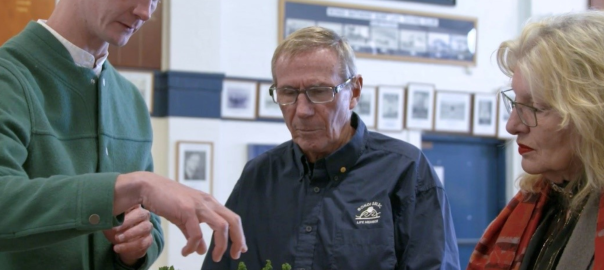
We recently created a series of safety videos for Bus Safety Week by Transport for NSW to be used on their social and digital channels.  The series focused on key safety messages in and around buses for all road users, including messages for pedestrians, motorists, bicycle riders, school children and vulnerable people.   The safety issues were personalised by using talent representative of the community with real bus drivers. This combination gave us insight and inspiration for messaging along with the level of authenticity required.  

Take a look at the videos we created in collaboration with Transport for NSW here.

Lauren Lawson, Senior Account Manager 

Primary Comms Group PR Company

Primary Comms Group integrates three agencies with a refreshed brand

Chris Hall, Chief Executive Primary Comms Group, said, “Today creative agency, Circus Group rebrands as Primary Create, alongside long-term sister businesses Primary Communication and Primary Engage, and together we are Primary Comms Group.”

Members of Primary Comms Group have enjoyed significant growth, accelerated by providing top-level integrated services to clients across government, business, and community sectors, all delivered via a single contract model with one-touch account leadership.

Primary Comms Group has tripled in size and quadrupled in service over the past five years and now provides clients with one-touch integration across PR, government relations, design, content development, digital marketing, and stakeholder engagement.

“At Primary Comms Group, our team makes great things happen for our clients across government, non-profit, consumer and corporate sectors. Primary’s seven business partners lead our diverse workforce with incredible loyalty and commitment,” added Mr Hall.

“Our story is told through the success of client programs, which are still growing, evolving, and being delivered by the Primary team, more than 30 years on. In 2021, we took home five PRIA Golden Target Awards, which is a testament to our commitment to delivering amazing results for our clients.”

Primary Comms Group works with iconic brands, such as Luxaflex Blinds, in consumer marketing, advises clients who lead research in the new energy economy in government relations, provides community education services for Australia’s biggest energy retailers in Electricity Safety Week, along with corporate communication for BOC.

The Primary Comms Group team directly support clients to access sophisticated and efficient communication, engagement, creative and marketing services. The depth of experience, loyalty and expertise saves clients valuable time and builds incredible trust and makes great things happen.

To coincide with the launch of the Primary Comms Group family, four new websites reflective of the new brand and visual identities, have been unveiled. The websites showcase the campaign experience and includes a wide portfolio of clients from consumer to tech, energy to industrial, tourism to sport and deep expertise with not-for-profits and mental health clients.

About Primary Comms Group

Primary Comms Group comprises of Primary Communication, Primary Create and Primary Engage. Founded more than thirty-two years ago today, Primary services clients across government, non-profit and business organisations who appreciate deep thinking, quick action and a team that makes great things happen for clients every single day.
Our three specialist businesses offer experts in creative design, strategic communication, and stakeholder engagement.

Primary Communication – high impact PR, government relations and marketing communication
Primary Create – advertising, design and persuasive creative concepts
Primary Engage – building community and stakeholder relationships and understanding

For the love of engagement

For the love of engagement

A considered engagement processes must therefore be front of mind for any business or organisation, and carefully planned from the outset, not treated as an afterthought.

Be it expanding a retail outlet, developing a commercial precinct or a freight hub, or planning a solar farm, it pays to develop and implement community and stakeholder engagement strategy to;

  • help raise community and stakeholder awareness of a planning proposal;
  • encourage open and genuine dialogue with community and other stakeholders;
  • build trust by responding to community interests, concerns and issues; and
  • ensure an approach that aligns with a State or Territory authorities’ best practice community and stakeholder engagement guidelines.

So what are some considerations?

  1. Go where the people are. Community engagement is centred around the community and the people in it, so people should be at the centre of your engagement.
  1. People want to talk to people. Now more than ever human connection is fundamental. This is when you leave your expert self at the office and listen to understand, without bias or judgement, taking in the good, the bad and the ugly.
  1. Having boots on the ground is essential. It shows the community that you care about what they think and want to hear from them directly. Regardless of whether you are at a town hall meeting or speaking with locals at the shopping mall, being there will provide rich insight into wants, needs, and thoughts. When it comes to major projects, the community values true two-way consultation with the proponent. The information collected is valuable and can be used to help inform a better planning proposal for a site expansion or an infrastructure project.
  1. Community sentiment can be summed up in a few quick conversations. Trending thoughts and concerns won’t take long to emerge. You may receive overwhelming support for a project, but it is always fascinating how, no matter how minor the issue with a proposal is, it is verbalised the quickest.
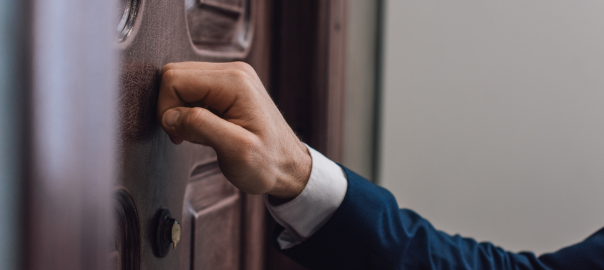
  1. It’s “old school” and “new school”, not “old school” versus “new school”. You can have both. The community engagement landscape is ever changing with tools, practices and methodology changing significantly over the last two decades. Although as a community we are becoming more tech savvy and connected online, particularly during the pandemic, we must incorporate “old school” techniques such as workshops, coffee meetings, door knocking, letterboxing and stalls to extract information from your target audience.

However, online community engagement must be front of mind. Online platforms are a cost-effective way to maximise your reach, and typically, a website and email address enables information sharing and conversation with people who – for whatever reason – are not able to meet in-person.

Monitoring social media to keep a finger on the community pulse is also a good idea.

  1. Diversity of voices paints a fuller picture. Even in the smallest communities and towns, people know people and can wear many hats. It is critical to speak with a varied range of stakeholders to ensure everyone feels heard, included and valued.

Ultimately, you want to reach a point where people are informed, feel heard and their concerns addressed. This may mean some compromises but having the community and stakeholders consulted and engaged will mean they are more likely to become invested in seeing the planning proposal progress and the approval process completed.

Jessie is an award-winning community engagement practitioner who also brings experience in communication and advocacy strategy and implementation.

Pre-election Budget unlikely to improve polls, and election result unclear

Pre-election Budget unlikely to improve polls, and election result unclear

At its heart, the budget provides short-term fiscal relief to millions of people who are seeing global events driving higher prices for everyday commodities and fuel.

Sweeteners dominating the headlines included a $250 cash payment to low income earners, fuel excise cut, mental health services, $1bn for local manufacturing, $18bn for infrastructure and a surprise increase in the Low to Medium Income Tax Offset.

In the medium term, this Budget bets that global recovery from the pandemic will continue and domestic inflation won’t soar out of control. So the government is painting hopefulness.

Will it have a lasting effect and influence the choices voters make at the ballot box? And can organisations guess who will win from the current situation? The answer isn’t clear – and for that you can thank deeply-rooted voter cynicism.
The Government’s public polling numbers are awful. But that might not matter on election day.

For many years, the impact of a Budget was measured by opinion polling, which reflected voting intentions at a particular time. Perversely, it’s hard to recall a Budget in recent memory that produced a positive bounce in any incumbent government’s numbers.

That’s because most of a cynical voting public are almost totally disengaged right now. They might not be expressing affection for either of the Prime Ministerial contenders, and they haven’t started to make their decisions.
If we’ve learned anything in recent years, it’s not to trust polling that’s based on universal swings and predictive preference flows.

Once upon a time, respondents answered landlines and even spoke with pollsters on their doorsteps. Not any longer.

Polling companies are trying a range of methodologies to keep up with societal shifts.

It is a truism that voters almost always vote through their hip pocket. The difference this time is that both major parties are trying to appeal to an electorate that’s tired, jaded and very focussed on their own backyards.
That means all meaningful politics is local and it’s likely that this election will (again) be decided in a handful of electorates with appeals to individuals via social media rather than through unwatched TV debates or staged photo opportunities.

At this time of an election campaign, organisations must be very cautious about getting caught in storm of public debate. There are three golden rules at this time:

  1. Keep all your bridges open, you never know how the election will travel until the votes are counted
  2. Respect that all candidates are in a wild public battle for their jobs and livelihood – this is not a time for coffee catch-ups or administrivia
  3. Balance any opportunity for public debate, with the risk of getting into a dog fight. Especially when the dogs are expert and bred for battle.

During election campaigns the machinery of federal government gets locked up into ‘caretaker mode’, where decisions are suspended and neutrality reigns supreme. They will not want to get involved with the Morrison government celebrating their nuanced budget, or the Albanese opposition responding with pointed brickbats.

In the coming days we will learn about the timing of this next election, so take great care of your policy positions and relationships across all sides of the political debating chamber.

Craig Regan, Senior Counsel, Government Affairs

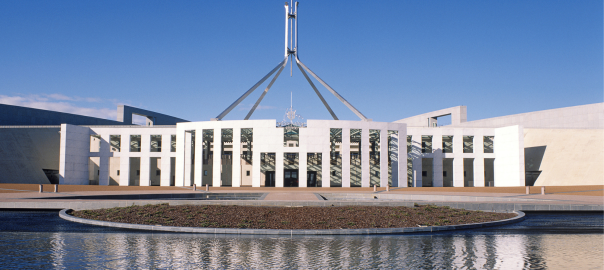
Parliament House

The State of play in the upcoming Federal elections

Between COVID, floods and the tragedy of the Russian invasion of the Ukraine, somewhere the news cycle is going to have to factor in the upcoming Federal Election.

Slated for mid to late May, it has been argued the domestic and global turbulence engulfing the media is exactly what both sides of politics want – an environment of little scrutiny and even less substance.

Labor has deliberately released little in the way of public policy. This responds to the failure of its 2019 strategy where the party released incredibly detailed policy suites, but lost the election despite nearly universal predictions of a win.

As for the Coalition, it has been weathering rolling disasters – be they natural and environmental or political and self-inflicted – and has struggled to stay on top of its current agenda let alone establish a new one.

Meanwhile disillusionment with both major sides has the so-called Independents again being touted as holding the potential balance of power – “so-called” because their commonalities and unity of messaging bears remarkable resemblance to those of political parties, bringing to mind the expression “if it walks like a duck and talks like duck…”

However, this has only occurred twice since Federation in 1901 – once in 1940 and then again in 2010. With polling becoming increasingly less indicative of actual outcomes, many look to betting markets for a guide.

Given current odds have Labor at $1.32, the Coalition at $3.20, and $41 if the independents decide which side holds government, it could be considered the election is Labor’s to lose.

A reflection on the expectations versus the outcomes of the 2019 Federal Election suggests that at this stage of the election cycle, it is still very much anyone’s guess as to who will be governing Australia after the 2022 election.

By Duncan Bremner

Duncan is Primary’s Senior Counsel, public affairs, with extensive and trusted networks in business politics, government, and media

Primary Comms Group

Cutting through the noise

So, you have laid out your business objectives and your strategy is crystal clear. 

You move on to tactics and a key pillar of your strategy is media relations. Your eyes are firmly set on getting that golden nugget of coverage in the media title that everyone wants to be in. 

What’s next?

The media cycle that we live in is 24/7. This, however, coupled with time-poor journalists means it has never been more important for businesses to ensure they are reaching the right journalists in the right media outlet, with the right messages to get cut-through. 

Here are a couple of tips to get you started

  1. Why are you talking? Really have a think about why you’re trying to secure media coverage and more importantly, why anybody should care. Egos aside, this step will really help determine what audiences your messages are relevant for.
  2. Invest time in planningFor most companies, getting media coverage requires careful planning, message development and a splash of creativity; but it’s also a journey of building credibility and connection. Reviewing objectives against any upcoming announcements can help create a hook. This will also help ensure you are going to the most fitting outlet and journalist for your story.
  3. Third party endorsementHave you got someone credible that can tell the journalist how awesome you are? Bring them along for the ride! Endorsements from scientists, customers, research bodies, academia, and stakeholders add another layer of credibility to your story.
  4. Collateral is keyNot everyone absorbs words well. Striking images showing you doing your thing will help appease those right-brainers, and so will assets such as infographics and charts where possible.

A great way to understand your target and get inspired is to immerse yourself in your target publications. For instance, look at trends in approach, get to know the names of the journalists and what the key ingredients are in a great story.